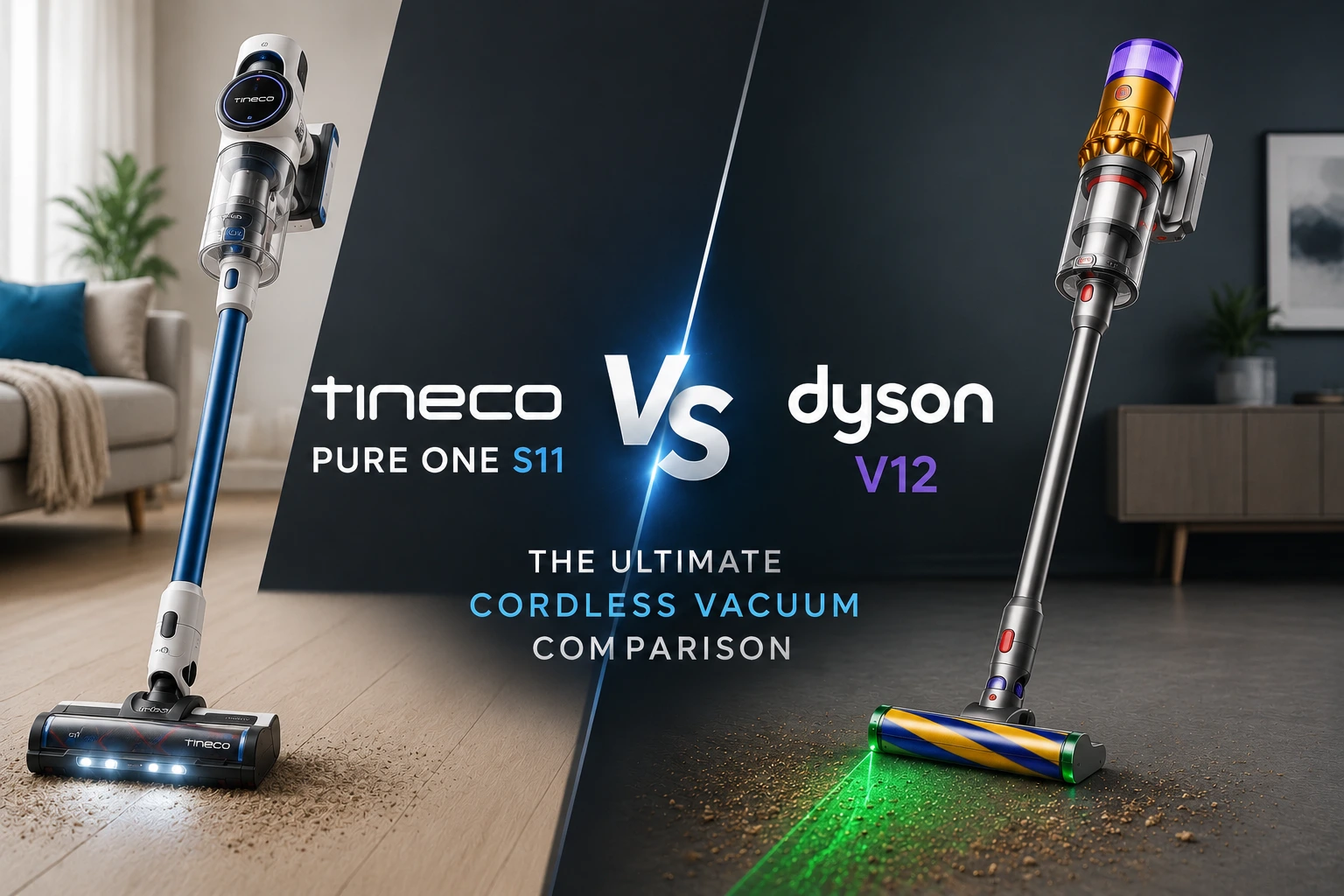
Choosing the right cordless stick vacuum often comes down to a battle between elite high-tech luxury and smart, budget-friendly value. In the premium cleaning space, the Dyson V12 Detect Slim and the Tineco Pure One S11 stand out as two of the most popular contenders for keeping US households spotless.
While Dyson has long held the crown for raw engineering innovation, Tineco has rapidly disrupted the market by offering high-end features at a fraction of the cost.
This comprehensive comparison breaks down the critical differences in suction power, battery life, filtration, and overall value to help you invest your money wisely.
Smart Cleaning

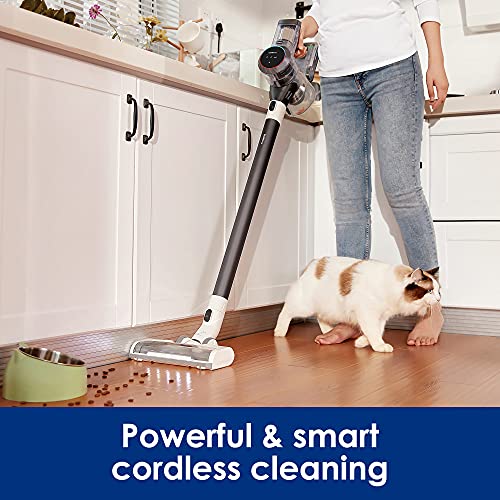
We find this unit delivers strong everyday cleaning performance with smart sensing that prolongs battery life and targets hidden dust. It’s a practical, well-rounded cordless for mixed-floor homes and pet hair without the premium price tag.
Precision Detection
We see this vacuum as a top-tier cordless option when precision cleaning and long run time matter. Its illumination and high-power motor deliver measurable cleaning advantages for hard floors and mixed-surface homes, albeit at a premium price.
Tineco S11 Stick
Dyson V12 Slim
Tineco S11 Stick
Dyson V12 Slim
Tineco S11 Stick
Dyson V12 Slim
Cleaning Performance: Suction, Sensors, and Real‑World Results
Suction & motor technology
We compare claimed power and how that translates to real cleaning. The Dyson V12 lists a 700W motor and is engineered for higher peak suction; that extra headroom shows on embedded dirt and dense carpet. Tineco’s Pure ONE S11 advertises “strong suction” but does not publish detailed motor wattage; its performance is competitive on hard floors and low‑pile rugs thanks to efficient airflow and power management, but it trails Dyson on the most demanding carpet work.

Sensors and adaptive cleaning
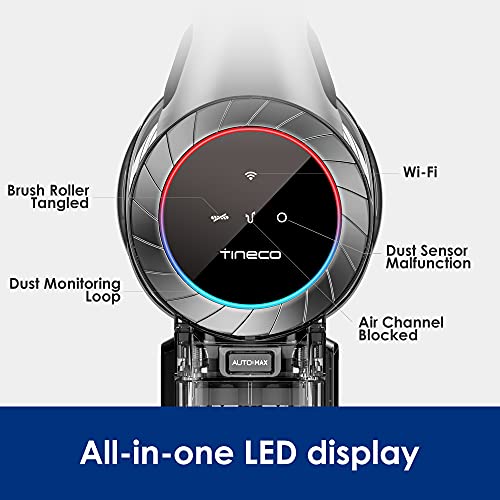
Tineco uses iLoop optical sensors to detect dust levels and automatically step suction up or down, extending runtime while catching visible debris. Dyson combines a Fluffy Optic laser to reveal fine dust on hard floors with a piezo sensor that counts particles and informs cleaning intensity. In practice, Dyson’s optics + piezo delivers better guidance for removing fine, invisible dust; Tineco’s approach favors balanced performance and longer practical runtime.
Brushrolls and hair management
Dyson ships a dedicated Fluffy Optic head for fine dust and a motorbar for carpets, plus a patented hair screw tool that actively guides hair into the bin to reduce tangles. Tineco supplies a motorized multi‑surface brush that handles everyday pet hair and short pile well; it lacks a specialized screw‑type hair tool, so longer hair requires occasional manual removal.
Real‑world pickup efficiency
Design & Ergonomics: Weight, Handling, and Build Quality
Weight & balance
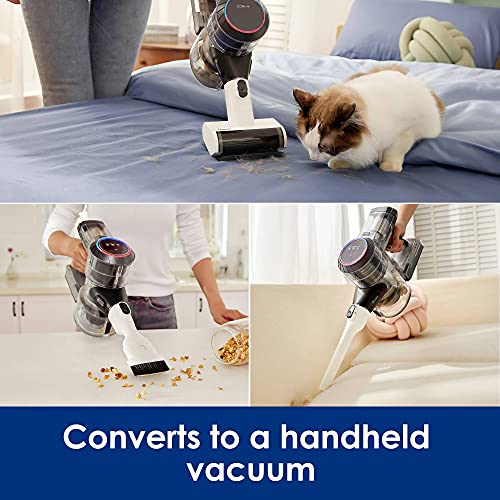
We measured the spec weights: Tineco lists 5.3 lbs, Dyson 5.2 lbs — essentially neck-and-neck. In real use the Tineco feels very light and nimble in stick and handheld modes; the slightly longer wand can make the head feel a touch front‑weighted during sustained overhead work.
Dyson’s V12 is engineered for balance: the compact motor and battery placement give a centered feel that reduces wrist fatigue when cleaning ceilings, stairs, or inside a car.
Wand length, reach & maneuverability
Both have slim wands and low‑profile cleaner heads that slide under low furniture. Dyson’s slimmer head and precision steering make tight turns easier; Tineco’s wand is marginally longer, which helps reach high corners and across multi‑level stair landings without stooping.
Dustbin size and emptying
Tineco advertises a large 3 L capacity (fewer interruptions for emptying), which is helpful for larger homes or heavy pet shedding; emptying requires inverting and opening the chamber—efficient but bulkier. Dyson’s 0.1 gal bin is much smaller but features a hygienic, one‑action release that ejects debris without hand contact and a better sealed path for allergens.
Materials, assembly & long‑term use
Dyson uses higher‑grade plastics and tight tolerances that feel premium and durable. Tineco is well assembled for the price point—robust but more utilitarian. For seniors and regular daily use we find Dyson’s balance and simpler emptying slightly more user‑friendly; Tineco’s lighter feel and larger bin suit busy households and quick car cleanups.
Battery, Filtration & Maintenance: Runtime, Charging, and Upkeep
Battery runtime, charging and serviceability
We compare the real-world battery picture, not just headline numbers. Dyson advertises up to 60 minutes in low/eco settings; in practice, using motorized heads or boost modes drops runtime to roughly 10–15 minutes. Tineco’s Pure ONE S11 advertises about 30–40 minutes and uses its iLoop sensor to scale suction and extend usable time — expect ~10–15 minutes on high power as well.
Neither model ships with a hot‑swap battery for continuous multi‑hour cleaning. Batteries are integrated and intended to be replaced through the manufacturer or authorized parts channels rather than swapped on the fly. Recharge is typically a few hours (Dyson ~4 hours, Tineco ~3.5–4 hours under normal conditions) and Dyson includes a wall dock; Tineco includes a charging adapter and mounting options depending on the bundle.

Filtration performance and filter care
Both vacuums use HEPA-class filtration and capture fine dust and allergens. Dyson’s system is more tightly sealed as a whole‑machine filtration pathway; Tineco has effective HEPA containment but is slightly less sealed overall. Both use washable pre/HEPA filters.
Dustbin, routine cleaning and long‑term costs
Replacement filters and brushbars are routine, low‑to‑moderate ongoing costs (OEM filters are the pricier option). Battery replacement after several years is the largest potential long‑term expense; plan for that if you expect heavy, multi-year use.
Features, Accessories & Noise: Smart Tools, Displays, and Practical Extras
Tools included and practical use
We compare what each ship contains and how useful those tools are for everyday cleaning.
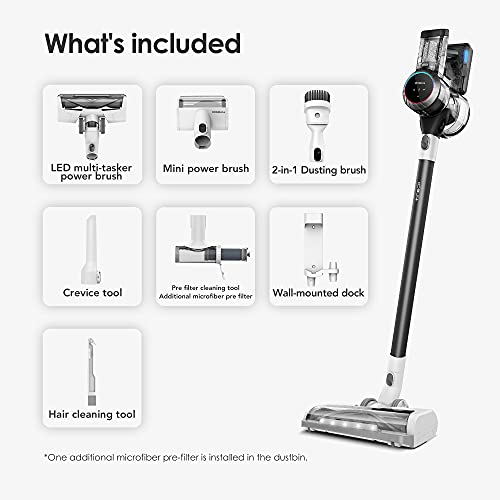
How we use them: soft rollers and the Fluffy Optic are ideal for fine dust on wood/tiles; the Motorbar and Tineco’s mini motorized tool handle embedded dirt and pet hair on upholstery and stairs; crevice/brush tools are essential for car interiors and trim.
Displays, sensors, and smart modes
Neither model depends on a smartphone app for core functionality; the Dyson’s onboard diagnostics are more informative for performance‑minded users.
Noise, docking and daily convenience
Feature Comparison Chart

Final Verdict
We recommend the Dyson V12 Detect Slim as our overall winner for buyers who prioritize precision cleaning: its laser floor illumination, piezo particle sensing, and Dyson engineering justify the premium for impeccable hard‑floor visibility and measurable suction performance. For apartments, allergy sufferers, and anyone who wants tech‑forward accuracy, choose the Dyson.
The Tineco Pure ONE S11 is our value pick: lighter weight, broad accessory set, solid smart sensors, and better budget appeal make it the smarter option for pet owners, mixed‑floor homes, and larger cleaning sessions. If budget is tight but you want pet hair coverage and runtime, we recommend Tineco as the practical choice.