Hardwood looks great until you mop it. Too much water seeps into the seams, the finish turns cloudy and boards can cup over time. The best electric mops for hardwood floors fix that by putting down only a light layer of water, scrubbing for you and leaving the floor dry in a minute or two.
For most homes with sealed wood, that means a wet-dry floor cleaner that vacuums up grit and sucks the dirty water back up. If you have a small space or a tight budget, a battery spin mop or spray mop can also work. Here’s how to match the right one to your floors.
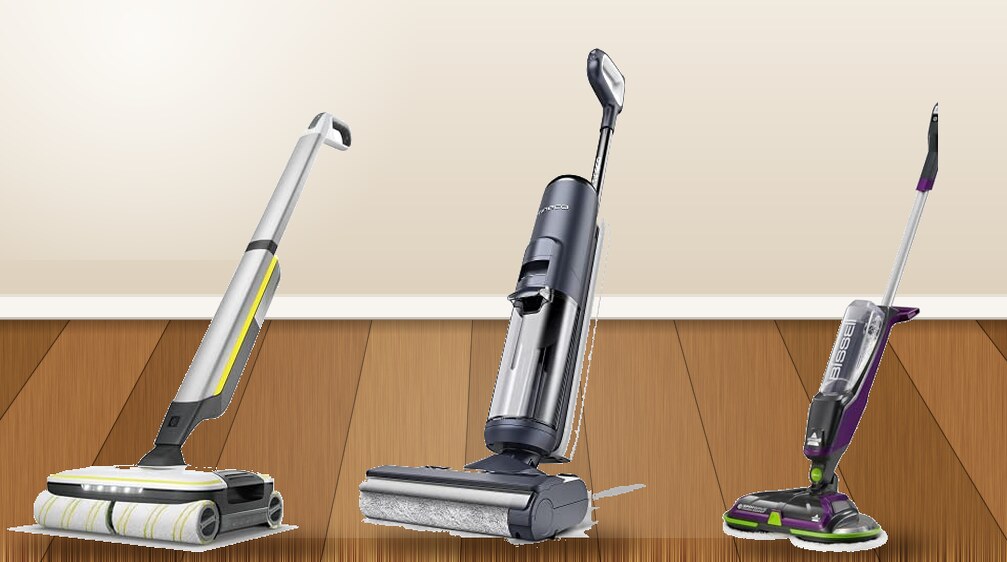
Our top 3 electric mops for hardwood

See how all 5 electric mops for hardwood compare in our side-by-side comparison chart ↓
The 5 Best Electric Mops for Hardwood Floors
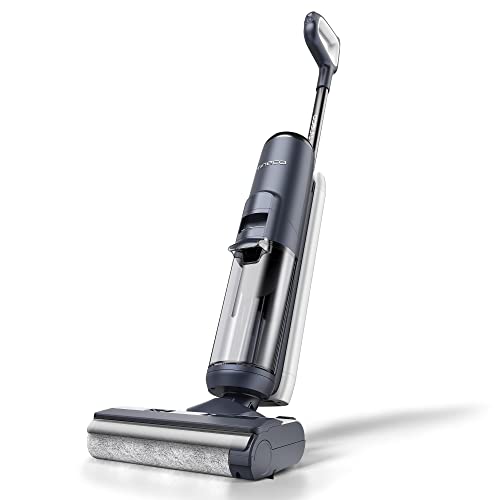
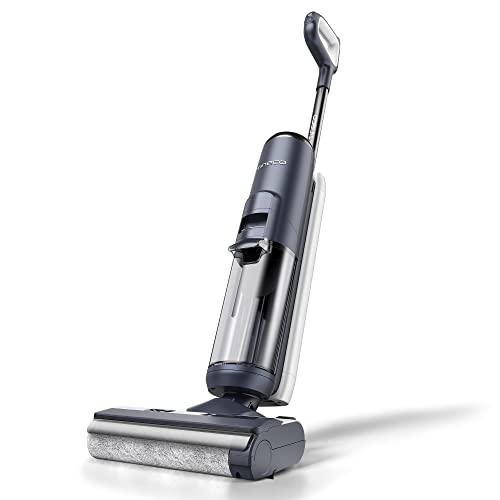
Tineco Floor ONE S5
- Named best for hardwoods in a hands-on electric mop test
- Left old sealed hardwood streak-free and quickly dry in another review
- Smart sensor adjusts water and suction to the mess
- Large 0.8-liter clean tank and up to 35 minutes per charge
- Doesn’t lie flat, so it can’t reach under beds and sofas
- Several cleanup steps after each use
- Takes 4 to 5 hours to recharge
Tineco Floor ONE S5 review
The Floor ONE S5 is the safest all-around choice for sealed hardwood because it controls water better than a mop ever could. Its iLoop sensor reads how dirty the floor is and raises or lowers water flow, suction and roller speed to match. On clean stretches, very little water touches the wood. On a sticky spot, it works harder, then pulls the dirty water back into its tank.
Independent results back this up. One hands-on electric mop test named it the best pick for hardwood after it cleaned a 1,700-square-foot home on one charge. Another reviewer used it on 100-year-old sealed hardwood with plain water and reported no streaks, no leftover puddles and floors that dried quickly.
It also vacuums as it mops, which matters on wood. Sand and grit are what scratch a finish, and the S5 picks them up instead of dragging them around.
The downsides are bulk and upkeep. It weighs about 10 pounds, won’t lie flat under furniture and needs its tank, roller and filter rinsed after every use. Choose it if you have mostly open sealed wood floors and want the most reliable results.
Kärcher FC 7 Cordless

- Rated to leave floors dry in about two minutes
- Low-water mode suited to delicate wood and parquet
- Four rollers pick up crumbs and hair while mopping
- Up to 45 minutes of runtime and lies nearly flat
- Small tanks: about 13.5 oz clean and 6.8 oz dirty
- Higher water setting can leave small pools on wood
- Dirty water can spill if you tilt it while carrying
Kärcher FC 7 Cordless review
If your biggest fear is water damage, the FC 7 is the pick. Instead of one wet brush roll, it uses four microfiber rollers that spin in opposite directions. Each gets a small, steady feed of clean water, and the dirty water is scraped off into a separate tank as they turn. Kärcher rates the drying time at about two minutes and lists parquet among the floors it’s built for.
Reviews match the claim. In a hands-on test on wooden floors, the reviewer could walk across the room within two minutes and saw no wet patches. Another reviewer found the floor dry about a minute after cleaning on the standard setting. That reviewer also noticed that the higher water setting left small pools, so keep it on the lower mode for wood.
The trade-offs are capacity and handling. The clean tank holds only about 13.5 ounces and the dirty tank about 6.8, so plan to empty it in bigger homes. Carry it upright, because dirty water can spill if you tilt it on stairs.
Buy it for older finishes, engineered wood or any floor where you want the least moisture possible.
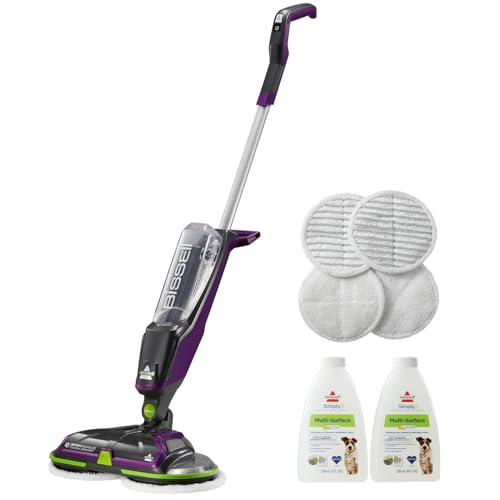
BISSELL SpinWave Cordless

- Top-rated of 15 floor scrubbers in one hands-on test
- Left kitchen hardwood clean and streak-free in that test
- On-demand spray keeps water use light
- Soft-touch and scrubby pads are machine washable
- Only about 20 minutes per charge
- No suction, so sweep or vacuum first
- Dried-on messes take several passes
BISSELL SpinWave Cordless review
A spin mop is the most traditional way to clean wood with power, and the SpinWave Cordless is the best one we found. In a hands-on test of 15 floor scrubbers, it came out on top, and the reviewer called it especially good for moisture- and pressure-sensitive floors like hardwood. Kitchen hardwood came out clean and streak-free.
It works like a damp mop with a motor. Two round pads spin against the floor while you guide the handle, and a trigger sprays solution only when you ask for it. Use the soft-touch pads on wood and save the scrubby pads for tile or stuck-on spots. Both sets are machine washable, and the 28-ounce tank lasts a full session.
It has limits. The battery runs about 20 minutes, which isn’t enough for a large home. It has no suction, so you’ll need to sweep or vacuum first. Grit left on the floor can get dragged by the pads. Dried, stuck-on food also takes a few passes.
Pick it for apartments, condos and smaller homes where you want a quick, gentle polish.
Tineco Floor ONE S3

- Smart sensor adjusts water and suction like pricier Tinecos
- Self-propelled head makes it easy to push
- Up to 35 minutes per charge
- Self-cleaning cycle in the dock
- Smaller 0.6-liter clean and 0.5-liter dirty tanks
- Leaves a wider gap along walls than the S5
- Older design with fewer features
Tineco Floor ONE S3 review
The Floor ONE S3 is the easiest way to get a true wet-dry floor cleaner on hardwood without paying for a flagship. It uses the same iLoop sensor idea as the S5, adjusting water and suction based on how dirty the floor is, so clean areas get a light pass and only messy spots get more water.
Tineco rates its water recovery at over 90 percent, which is a maker claim, but it explains why floors dry fast with this design. The head is self-propelled, so it pulls forward on its own and feels lighter than its roughly 10 pounds. You get up to 35 minutes per charge and a self-cleaning cycle that rinses the roller in the dock.
The savings show up in size and edges. The clean tank holds 0.6 liters and the dirty tank 0.5, so larger homes may need a refill. A review of the newer S5 also noted that its edge cleaning was much better than the S3’s, so expect a slightly wider strip along baseboards.
Choose it if you have a small or mid-size home with sealed wood and want wet-dry cleaning on a tighter budget.
Swiffer PowerMop Wood

- Lowest-cost way to get a powered spray mop
- QuickDry wood solution and pads made for finished floors
- Light, quiet and nothing to charge or rinse
- Swivel head reaches around table legs and toilets
- Battery-powered sprayer only, no scrubbing motor
- Can’t pick up crumbs or larger debris
- Disposable pads and refills add ongoing cost
- Floors can feel sticky until fully dry
Swiffer PowerMop Wood review
The PowerMop Wood isn’t a floor scrubber, and it doesn’t pretend to be one. Two AA batteries power a sprayer that puts down a fine mist of solution, and a disposable pad does the cleaning. That simple setup is exactly why it’s gentle on wood. You control how much liquid goes down, and the pad absorbs it instead of leaving puddles.
This version comes with pads designed for wood and Swiffer’s QuickDry solution, which Swiffer says dries up to twice as fast as a regular all-purpose cleaner. It’s meant for finished floors only, not oiled, waxed or unfinished wood.
In a review of the standard PowerMop, the tester cleaned a 900-square-foot apartment in about 20 minutes, half her usual time. She also found that it can’t pick up larger debris and that floors felt a little sticky until they dried.
Think of it as a daily or weekly touch-up tool, not a deep cleaner. Pads and solution are ongoing costs, and you need to vacuum first.
Buy it if you want something light and cheap for quick cleanups between deeper cleans.
Electric mops for hardwood compared
|
Best overall
Tineco Floor ONE S5
|
Best for fast drying
Kärcher FC 7 Cordless
|
Best spin mop
BISSELL SpinWave Cordless
|
Best value
Tineco Floor ONE S3
|
Best budget
Swiffer PowerMop Wood
|
|
|---|---|---|---|---|---|
|
|
|
|
|
|
|
| Type | Wet-dry vacuum | 4-roller wet-dry | Spin mop | Wet-dry vacuum | Spray mop |
| Runtime (rated) | 35 min | 45 min | 20 min | 35 min | AA batteries |
| Clean tank | 27 oz | 13.5 oz | 28 oz | 20 oz | Bottle |
| Picks up crumbs | 1 | 1 | – | 1 | – |
| Self-cleaning | 1 | 1 | – | 1 | – |
| Low moisture on wood | 3 | 3 | 2 | 3 | 2 |
| Ease of use | 3 | 2 | 2 | 3 | 3 |
| Current price | $349.99 | $499.99 | $164.99 | $199.90 | $29.97 |
| Read review | Read review | Read review | Read review | Read review |
Electric mops for hardwood compared


Prices and availability change often. Runtimes, tank sizes and drying times are maker ratings. Cleaning notes come from published independent reviews where noted. Star ratings are our editorial judgment based on those results, not our own lab tests.
Is it safe to use an electric mop on hardwood floors?
Yes, if the floor is sealed and the mop keeps water light. Water is the real risk with hardwood, not the motor. When moisture sits on wood or gets into the gaps between boards, it can cloud the finish, raise the grain and cause boards to swell or cup over time. A good electric mop for wood either sucks the dirty water back up right away or sprays only a thin mist that dries in a minute or two.
First, check that your floor is sealed. Put a few drops of water in a spot that sees traffic. If the water beads up, the finish is doing its job and an electric mop is fine. If the water soaks in or darkens the wood within a few minutes, the floor is unsealed, oiled or worn. Stick to a barely damp microfiber mop there, and talk to a flooring pro about refinishing.
Also skip steam. Steam mops push hot moisture into seams and can break down the finish, and many hardwood makers void their warranty if you use one. None of the picks on this list use steam.
Which type of electric mop is best for hardwood?
There are three main types, and each one handles wood a little differently.
Wet-dry floor cleaners like the Tineco S5, Tineco S3 and Kärcher FC 7 vacuum and mop at the same time. A roller is wetted with clean water, scrubs the floor, then suction pulls the dirty water into a separate tank. They’re the best choice for most hardwood homes because they pick up grit before it can scratch the finish and they leave very little water behind.
Spin mops like the BISSELL SpinWave use two spinning pads and a trigger sprayer. They feel like a powered version of a regular mop and are great at buffing finished wood, but they have no suction. You have to sweep first, and they can’t pick up spills.
Battery spray mops like the Swiffer PowerMop Wood only power the sprayer. They’re light and cheap, and they’re fine for quick touch-ups, but they don’t scrub.
How to choose an electric mop for hardwood floors
The less water that sits on wood, the safer the finish. Look at how the mop puts water down and how it takes it back.
Fast drying means less chance of water getting into seams and fewer footprints on a damp floor.
Steam forces heat and moisture into wood and can damage the finish.
Sand and grit act like sandpaper under a mop pad and dull the finish over time.
Wood finishes scratch more easily than tile, so the part that touches the floor matters.
Bigger homes need more battery and more water before a refill.
Electric mop vs. regular mop on hardwood
A regular string or sponge mop is the hardest way to clean wood safely. It’s easy to put down too much water, and the dirty water goes right back on the floor each time you dunk it. A flat microfiber mop that’s barely damp is much better and costs very little, but it still takes effort and doesn’t pick up crumbs.
An electric mop does the scrubbing for you and controls the water. Wet-dry models also keep clean and dirty water separate, so you’re never spreading grime around. If you have more than a couple of rooms of hardwood, kids or pets, an electric mop saves real time and is gentler on the finish. If you have one small room, a good microfiber mop will do.
What cleaning solution should you use on hardwood?
Use the solution made for your mop, or plain water. Most wet-dry floor cleaners are designed for their own pH-neutral formula, and other cleaners can foam up inside them or void the warranty. Skip vinegar, ammonia, bleach and oil soaps on sealed wood. They can dull the finish or leave a film that attracts more dirt. If you use a separate hardwood cleaner, check that the mop maker allows it before adding it to the tank.
How to mop hardwood floors with an electric mop
-
Test your finish first
Do the water drop test in a busy spot. Only use an electric mop if the water beads up.
-
Remove grit
Vacuum or sweep first unless your mop is a wet-dry cleaner. Grit dragged under a pad can scratch the finish.
-
Choose the lowest water setting
Start with the low or wood mode. Only add water or use Boost on sticky spots, then go back to low.
-
Mop with the grain
Move along the length of the boards and keep the head moving. Don’t let a wet pad or roller sit in one spot.
-
Check for puddles
The floor should look dry within a few minutes. If you see standing water, wipe it with a dry microfiber cloth and lower the water setting next time.
-
Clean the mop after use
Empty the dirty tank, run the self-clean cycle or wash the pads, and let everything dry so it doesn’t smell or spread bacteria next time.
Electric mops for hardwood FAQs
What is the best electric mop for hardwood floors?
For most homes with sealed hardwood, the Tineco Floor ONE S5. It adjusts water to the mess, vacuums up grit as it mops and left sealed wood streak-free in independent reviews.
Can an electric mop damage hardwood floors?
It can if it leaves too much water behind or if the floor isn’t sealed. Use the lowest water setting, keep the head moving and never use steam on wood.
Are wet-dry vacuums safe for hardwood?
Yes, on sealed hardwood. They put down a small amount of water and suck most of it back up right away, so the floor dries quickly.
Is a spin mop or a wet-dry vacuum better for hardwood?
A wet-dry vacuum is better for most homes because it picks up grit and dirty water. A spin mop is a good choice for small spaces if you sweep first and want a polished look.
Can I use a steam mop on hardwood floors?
It’s not recommended. Steam pushes heat and moisture into the wood and seams, and many flooring makers warn against it. Choose a non-steam electric mop instead.
How often should I mop hardwood floors?
Most homes do well with a damp mop once a week in busy areas and every few weeks in quiet rooms. Vacuum or dust mop more often to keep grit off the finish.
Can I use these mops on engineered hardwood?
Yes, if the surface is sealed. Engineered wood can be more sensitive to water at the seams, so the low-water Kärcher FC 7 or a light setting on the Tineco models is the safest choice.
Which electric mop should you buy for hardwood?
- Best overall: Tineco Floor ONE S5
- Best for fast drying: Kärcher FC 7 Cordless
- Best spin mop: BISSELL SpinWave Cordless
- Best value: Tineco Floor ONE S3
- Best budget: Swiffer PowerMop Wood
Start with the Tineco Floor ONE S5 if you want clean, dry, streak-free sealed wood with the least effort. Choose the Kärcher FC 7 Cordless if your finish is older or you want the least water possible on the boards. The BISSELL SpinWave Cordless suits smaller homes that want a gentle polish, the Tineco Floor ONE S3 brings wet-dry cleaning for less, and the Swiffer PowerMop Wood is a simple tool for quick touch-ups.
How We Picked and Tested
Our recommendations are based on published hands-on reviews and verified manufacturer specifications. We reviewed test results from Bob Vila, Real Homes and GadgetGuy, plus Bob Vila’s test of 15 floor scrubbers, Harvey Norman’s test of the Kärcher FC 7 on wooden floors, Reader’s Digest’s review of the Swiffer PowerMop, and spec pages from Tineco, Kärcher, BISSELL and Swiffer.
Hardwood was the filter from the start. We only considered mops that their makers approve for sealed wood floors, and we left out every model that relies on steam, since steam can push heat and moisture into the finish and seams. That rules out several popular hard floor cleaners that are a better fit for tile.
From there, we weighed how much water each mop leaves behind, drying time, how gently it treats a wood finish, whether it picks up grit, runtime, tank size and upkeep. Each product got a distinct role based on where its independent results and specifications were strongest, and each review explains who should choose something else.
Runtimes, tank sizes, drying times and water recovery figures are manufacturer ratings, while cleaning results are attributed to the independent sources above. We did not test these mops ourselves.
Why trust CleanTheFloor?
CleanTheFloor publishes practical floor-care advice and buying guides for homeowners and pet owners. We base our picks on published test results and verified specifications rather than marketing claims, and we point out each product’s drawbacks.