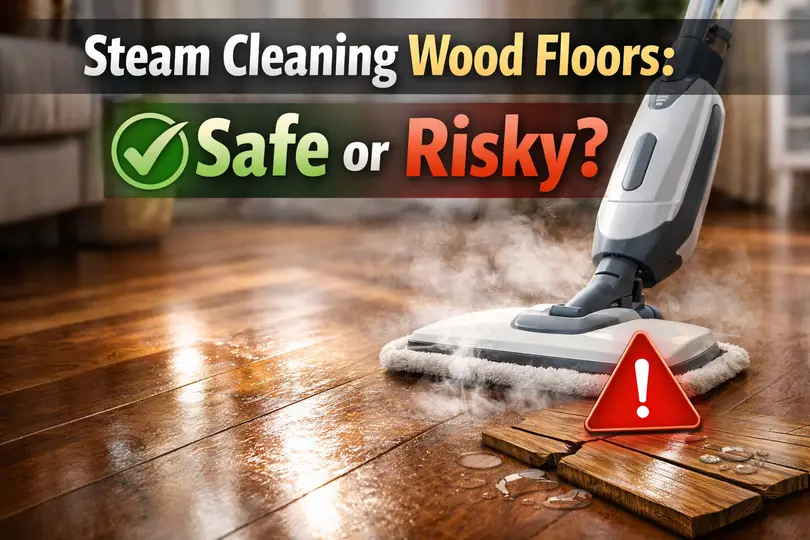
Steam mops are everywhere right now. They promise deep cleaning, sanitizing power, and chemical free results. So naturally, many homeowners wonder if wood floor steam cleaning is a safe and effective option.
The honest answer? It depends on your floors and how you use the steam.
Wood is a natural material. It expands and contracts with moisture and temperature changes. While steam can kill bacteria and loosen dirt, it also introduces heat and moisture, which can damage wood if used incorrectly.
In this guide, we’ll cover when steam cleaning is safe, when it’s risky, the correct method to follow, and better alternatives for long term floor care.
Is Steam Cleaning Safe for Wood Floors?
Short answer: Steam cleaning is only safe for properly sealed hardwood floors and even then, it should be used sparingly.
Also Read: Top 10 Best Steam Mops For Hardwood Floors
Here’s what matters most:
1. Sealed vs. Unsealed Wood
If your hardwood floors are sealed with a strong polyurethane or similar protective finish, they have a moisture barrier. In this case, limited steam exposure may be tolerated.
If your floors are:
- Unsealed
- Wax-finished
- Oil-finished
- Worn or scratched
Steam cleaning is not recommended. Moisture can seep into the wood grain and cause damage over time.
2. Solid Hardwood vs. Engineered Wood
- Solid hardwood is more vulnerable to moisture expansion.
- Engineered wood has a layered construction, but still contains real wood on top.
Both types can be damaged by excessive steam if the finish is compromised.
3. Manufacturer Guidelines
Always check your flooring manufacturer’s care instructions. Some brands clearly state that steam cleaning voids the warranty.
Why Steam Can Damage Wood Floors
Steam mops release heated vapor that condenses into moisture when it touches a cooler surface. Even though it looks dry, it still introduces water.
Over time, this can cause:
Warping and Cupping: Moisture absorbed into the wood causes boards to expand unevenly. This leads to raised edges or curved planks.
Gaps Between Planks: As wood absorbs and releases moisture repeatedly, boards shift and separate.
Finish Breakdown: Heat and moisture can weaken protective coatings, leading to dullness, peeling, or cracking.
Mold Risk: If moisture seeps into seams and stays trapped, it can encourage mold growth beneath the surface.
The damage doesn’t always happen immediately. Often, it shows up months later after repeated exposure.
When Steam Cleaning May Be Safe
There are limited situations where steam can be used more safely:
- Floors are fully sealed with polyurethane
- The finish is in excellent condition
- You use the lowest steam setting
- The mop is constantly moving
- Cleaning is occasional, not weekly
Even in these cases, steam should never replace regular dry cleaning.
Safe Method for Wood Floor Steam Cleaning
If you decide to use steam on sealed hardwood, follow this step-by-step method to reduce risk.
Step 1: Test a Small Area
Choose a hidden corner and lightly steam it. Check for dullness, swelling, or discoloration after drying.
Step 2: Vacuum or Sweep First
Always remove dirt, dust, and grit before steaming. Steam should never be used to push debris around.
Step 3: Use the Lowest Steam Setting
High steam equals more moisture. Keep it on the lowest possible setting that still loosens dirt.
Step 4: Keep the Mop Moving
Never let the steam sit in one place. Constant motion reduces heat and moisture buildup.
Step 5: Avoid Seams and Edges
Do not focus steam along plank seams or edges where moisture can seep in.
Step 6: Dry Immediately
After steaming, wipe the floor with a dry microfiber cloth to remove residual moisture.
This extra drying step makes a big difference.
What to Avoid When Steam Cleaning Wood Floors
Many floor problems happen because of simple mistakes. Avoid these common errors:
- Holding steam in one spot
- Using steam on damaged or scratched areas
- Cleaning too frequently
- Using high heat repeatedly
- Steam cleaning older floors with worn finishes
- Assuming “light steam” means zero moisture
Even sealed floors can weaken over time with repeated exposure.
How Often Should You Steam Clean?
If your floors are sealed and you choose to steam clean, limit it to occasional deep cleaning only — not weekly maintenance.
For most homes:
- Dry cleaning (vacuum or dust mop) should be done several times per week.
- Light damp mopping should be done as needed.
- Steam cleaning should be rare.
Using steam too often increases the chance of long-term damage.
Better Alternatives to Steam Cleaning
For everyday care, lower-moisture methods are much safer and still highly effective.
Microfiber Mop + Wood Floor Cleaner
A microfiber pad traps dust and dirt without excessive moisture. Pair it with a pH-neutral hardwood cleaner for best results.
Spray-and-Wipe Method
Spray cleaner directly onto the mop pad — not the floor — and wipe gently.
Light Damp Mopping
Use a well-wrung mop. The mop should feel barely damp, not wet.
Regular Vacuuming
Use a vacuum designed for hard floors to remove debris that can scratch the finish.
These methods protect the seal while keeping floors clean and polished.
Signs Steam Has Damaged Your Floor
If you’ve already used steam, watch for these warning signs:
- Boards feel uneven or raised
- Edges appear slightly lifted
- Finish looks cloudy or dull
- Small cracks appear between planks
- Soft spots underfoot
If you notice these issues, stop steam cleaning immediately.
Frequently Asked Questions
Can steam ruin hardwood floors?
Yes, especially if the floor is unsealed or the steam is used frequently. Moisture penetration is the main risk.
Is steam cleaning safe for engineered wood?
Only if the surface layer is fully sealed and in excellent condition. Even then, use caution.
Does steam sanitize hardwood floors?
Steam can kill bacteria, but regular hardwood cleaning methods are usually sufficient for household hygiene.
What is the safest way to clean hardwood floors?
Regular vacuuming combined with a microfiber mop and wood-safe cleaner is the safest long-term approach.
Final Thoughts
Wood floors are beautiful, durable, and valuable — but they are sensitive to moisture. While wood floor steam cleaning can work in limited situations, it’s never completely risk-free.
If your floors are sealed and in good condition, steam may be used occasionally with careful technique. However, for regular maintenance, low-moisture cleaning methods are far safer and just as effective.
When it comes to hardwood, protecting the finish is everything. A little caution today can prevent costly repairs tomorrow.