The best way to clean carpeted stairs is to work one step at a time from the top down. Vacuum every tread and riser with a crevice tool and a small powered brush, treat spots by blotting instead of rubbing, and deep clean with a portable carpet cleaner that sprays a little and sucks most of it back up. Keep water away from the back corner of each step, and let the stairs dry fully before anyone walks on them.
Stairs collect more dirt than almost any other carpet in the house, because every trip up or down grinds grit into the same small strip of pile. A big upright vacuum can't sit flat on a step, so most people clean them less often than they should. This guide shows you how to clean the carpeted stairs safely and quickly, with a weekly routine, a deep clean method, stain fixes, and the few tools that make the job easier.
How to clean carpeted stairs in 5 steps
- 1. Clear and dust Take everything off the steps and dust the handrail, spindles and baseboards first, so falling dust lands on carpet you haven’t vacuumed yet.
- 2. Vacuum top to bottom Start at the top step. Run a crevice tool along the back corner and the sides, then go over the tread, the nose and the riser with a small powered brush.
- 3. Blot spots, don't rub Blot spills with a white cloth, work from the edge toward the center, and use only a little cleaner. Rubbing spreads the stain and frays the pile.
- 4. Deep clean with little water Use a portable carpet cleaner with a hand tool. Spray lightly, scrub, then make slow extra suction passes until almost no water comes up.
- 5. Dry before walking Open windows or aim a fan at the stairs. Most steps dry in a few hours, and anything still damp should be dry within 24 to 48 hours.
Based on care guidance from the Carpet and Rug Institute, carpet maker Shaw, the U.S. EPA and BISSELL’s stair cleaning instructions.
Why Carpeted Stairs Need a Different Approach
Cleaning stairs isn't just vacuuming a smaller floor. Three things make them harder:
- Traffic is packed into a tiny area. Every person and pet steps on the same spot of each tread, usually the front center, so dirt builds up there fast and wears the pile.
- Dirt hides in corners. Dust and hair collect in the back corner where the tread meets the riser, and along the sides against the wall and the stringer. A wide floor head can't reach those spots.
- The carpet wraps around edges. Stair carpet is stretched over the nose of each step and fastened with tack strips and staples. If water soaks in there, it sinks into the pad and takes a long time to dry.
The fix is simple: smaller tools, one step at a time, and as little water as possible.
What You Need to Clean Carpeted Stairs
You don't need much. For a weekly clean and the odd deep clean, gather:
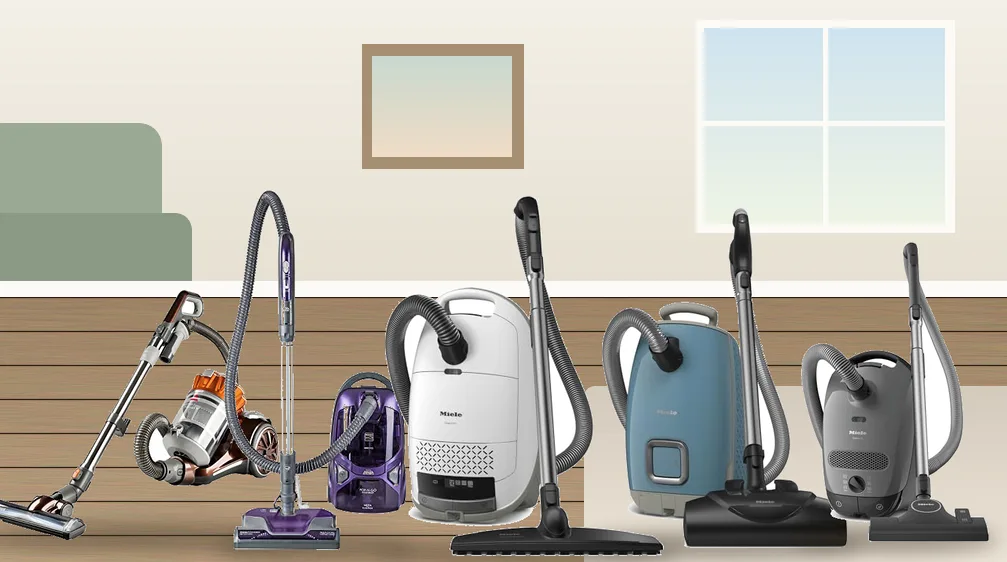
- A vacuum you can hold on the step. A handheld vacuum, a stick vacuum that converts to a handheld, or a canister or lift-away upright with a hose. Make sure it has a crevice tool and a small powered brush, often called a pet tool or turbo brush.
- A stiff hand brush or rubber pet hair tool for hair that the vacuum leaves behind.
- Plain white cloths or paper towels for blotting. Colored cloths can transfer dye.
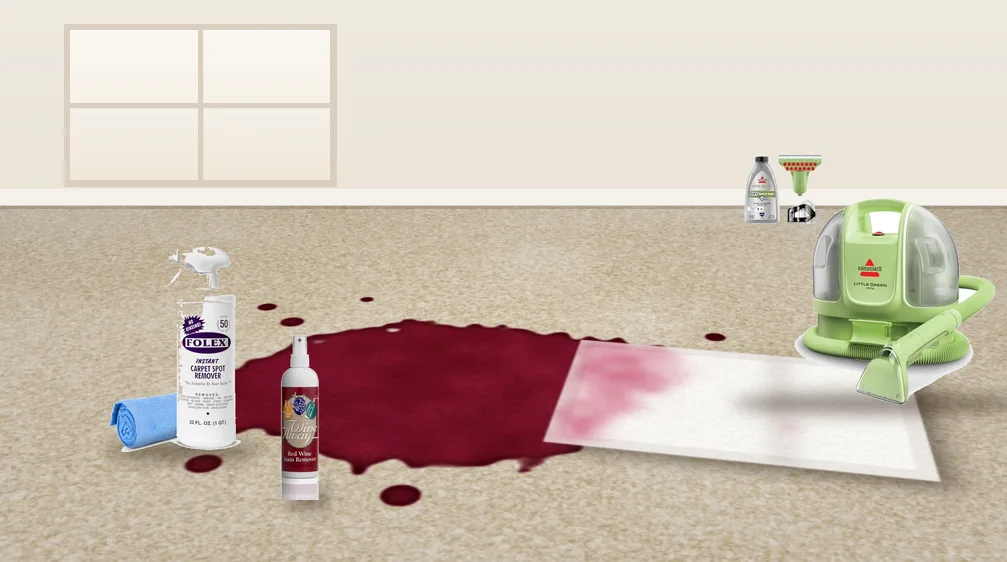
- A carpet spot remover that lists carpet on the label, ideally one certified by the Carpet and Rug Institute (CRI).
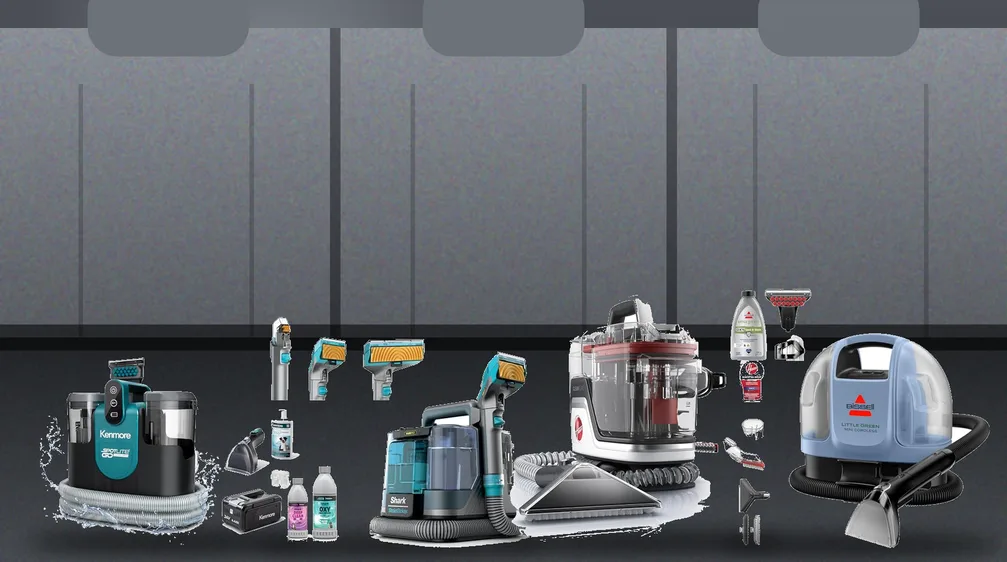
- A portable carpet cleaner (spot cleaner) with a hose and hand tool for deep cleaning. Rent one if you only need it once a year.
- A spray bottle of plain water for rinsing out cleaner after spot treatment.
- A fan to speed up drying.
If you're still choosing a vacuum, our guide to the best vacuums for stairs compares corded and lift-away models that work well on steps.
How to Vacuum Carpeted Stairs Step by Step
-
Clear the stairs
Pick up shoes, toys, laundry and anything else on the steps. If you have a stair runner, check that it’s still tight and that no rods or staples have come loose before you start.
-
Dust the handrail and spindles first
Wipe the handrail, spindles, baseboards and any wall trim with a dry or barely damp microfiber cloth. Dust falls down, so doing this first means the vacuum picks it all up.
-
Loosen hair and grit
If you have pets, run a rubber pet hair tool or a stiff hand brush across each tread, pulling toward the front. It pulls up embedded hair and loose grit so the vacuum can grab it.
-
Start at the top step
Work from the top down so loosened dirt only falls onto steps you haven’t cleaned yet. Stand or kneel below the step you’re cleaning, and keep the vacuum on a flat tread or the landing, never balanced on an edge.
-
Do the corners and edges with the crevice tool
Run the crevice tool along the back corner where the tread meets the riser, then down both sides. This is where most of the dust and hair on a stair hides.
-
Go over the tread, nose and riser
Switch to a small powered brush. Use slow, overlapping strokes across the tread, then over the front nose and down the riser. For stubborn pet hair, make a second pass in the other direction.
-
Move down one step and repeat
Clean each step completely before you move on. Move the vacuum down every step or two, and keep the cord or hose to the side of the stairs, not across them, so nobody trips.
-
Finish the landing and the bottom step
Vacuum the landing and the floor at the bottom of the stairs, where debris from the steps collects. Empty the bin or check the bag, since a full one cuts suction.
How Often Should You Clean Carpeted Stairs?
The Carpet and Rug Institute recommends vacuuming at least once a week, and more often in high-traffic areas. Stairs are the definition of high traffic. A schedule that works for most homes:
- Every few days: a quick pass on the treads with a handheld vacuum, especially with pets or kids.
- Weekly: a full clean of every step, including the corners, sides, noses and risers.
- As soon as it happens: blot spills and pet accidents right away. Fresh stains come out far more easily than set ones.
- Every few months, or when the treads look dull: a deep clean with a portable carpet cleaner.
- Every 12 to 18 months: a professional deep clean. That's CRI's advice for the whole house, and some carpet warranties require it. Shaw, for example, says its carpet must be properly cleaned at least once every 18 months, and it recommends hot water extraction.
How to Deep Clean Carpeted Stairs
Deep cleaning lifts the oily, ground-in soil that a vacuum leaves behind, which is what makes the front edge of each tread look grey. The safest DIY method on stairs is a portable carpet cleaner (also called a spot cleaner) with a hose and a small hand tool. A full-size upright carpet cleaner can't sit level on a step, and it puts down far more water than a stair needs.
- Vacuum first. BISSELL, which makes many of these machines, points out that loose dirt mixed with cleaning solution turns into muddy residue. Do the full vacuum routine above.
- Test the cleaner. Try the solution on a hidden spot, like the back of the bottom step or inside a closet, and check for color change after it dries.
- Fill the machine as the label says. Use the recommended amount of formula. More soap doesn't clean better. It leaves sticky residue that attracts dirt, and the stairs get dirty again faster.
- Start at the top. Set the machine on the landing or a flat step above you. Clean the tread first, then the riser below it.
- Spray lightly and scrub. Press the spray trigger for short bursts while you push the tool forward, then scrub with the tool's bristles.
- Pull out the water. Let go of the trigger and pull the tool slowly toward you. Repeat the dry suction passes until almost no water comes up the nozzle. This step matters more than the spraying.
- Go easy on the back corner. Don't spray straight into the joint between the tread and the riser. Water there soaks into the pad and the tack strip and dries slowly. Clean it with a damp tool and extra suction passes.
- Rinse if the label says to. Some formulas need a clean-water pass. Leftover detergent is the most common reason a cleaned carpet gets dirty again fast.
- Dry the stairs well. Open windows, run a fan aimed up the stairs, and keep people and pets off until the carpet feels dry. BISSELL suggests about 2 to 4 hours with good airflow, or overnight in humid weather.
Why drying matters so much on stairs: the U.S. EPA says that wet materials dried within 24 to 48 hours usually won't grow mold. Damp padding under stair carpet can smell musty and grow mildew, and it can loosen the carpet backing. If a step is still damp the next day, put a fan on it and extract it again with no water.
Want a machine for this job? We compared compact models in our guide to the best carpet cleaners for stairs.
How to Remove Stains From Carpeted Stairs
Stairs get the same stains as the rest of the house, plus a lot of muddy footprints and pet accidents. The method is the same for almost all of them, and it comes from the CRI and Shaw care guides:
- Remove what you can. Scoop up solids with a spoon, vacuum dried dirt, and blot liquids with a white cloth until it comes up nearly dry.
- Pretest your cleaner on a hidden spot.
- Apply a small amount to a white cloth, not straight onto the carpet, and work from the outer edge toward the center so you don't spread the stain.
- Blot, don't scrub. Press, lift and repeat. Scrubbing frays the fibers and leaves a fuzzy patch that looks worse than the stain.
- Rinse by blotting with clean water, then blot dry.
- Dry it under weight. Lay a few layers of white paper towels on the spot and set something heavy on top that won't transfer color. Shaw recommends this method. On a stair tread, a heavy book in a plastic bag works.
Quick fixes for common stair stains
- Mud: let it dry completely, then break it up with a stiff brush and vacuum. Treat any mark left behind with a carpet spot remover.
- Coffee, juice and soda: blot right away. A mild solution of 1/4 teaspoon of clear dish soap in a cup of lukewarm water, as CRI suggests, often works. Rinse well afterward.
- Grease and makeup: blot with a carpet spot remover made for oily stains, and repeat a few times rather than soaking the area.
- Gum and wax: freeze it hard with an ice pack in a bag, then chip it off with a dull knife. Vacuum the bits.
- Pet urine and vomit: blot up as much as you can, then use an enzyme cleaner or a pet formula. CRI warns not to use steam or very hot water on urine, because heat can set the stain and the odor. Use cool water and extract it.
For more stain-by-stain fixes, see our full guide to carpet stain removal. If you mostly deal with pet messes, our picks for the best spot carpet cleaners for pet stains handle urine and odor better than a spray alone.
What not to put on stair carpet: Shaw says bleach can't be used as a carpet cleaner, and warns against harsh products like tile cleaners, oven cleaners and drain openers, plus disinfectants with quaternary ammonium. They can fade the color, damage the fibers and void the warranty.
How to Get Pet Hair Off Carpeted Stairs
Pet hair weaves itself into stair carpet, especially on the nose of each step where pets push off. Suction alone often leaves it behind. What works best:
- Rake it first. Pull a rubber pet hair tool or a metal-edged lint tool across the tread in short strokes toward you. The hair rolls into a clump you can pick up.
- Then vacuum with a powered brush. A small motorized brush on a handheld or a hose grabs what's left. Tools with a self-cleaning roller stop hair from wrapping.
- Go across the grain. A second pass at a right angle lifts hair that's lying flat.
- Brush your pet more. Less loose hair means less on the stairs. Regular brushing near the door helps a lot during shedding season.
We cover more hair-removal tricks for couches, beds and cars in our guide on easy ways to remove pet hair.
Cleaning Stair Runners and Wool Carpet
A runner or wool carpet on stairs needs a gentler touch:
- Wool: use only cleaners labeled safe for wool, keep water to a minimum, and avoid high heat and strong alkaline products. Turn off the brush roll or use a suction-only tool on delicate or long pile.
- Stair runners: vacuum the bare treads at the edges of the runner too. Check that the rods or staples are secure before wet cleaning, and never soak a runner, since water can wick into the wood underneath.
- Shag or long pile: Shaw recommends a suction-only vacuum for long shag styles. A rotating brush can fuzz and tangle the yarn.
Stay Safe While You Clean
Stairs are the riskiest place in the house to clean. A few habits keep it safe:
- Keep the cord, hose and machine off the walking path, and never leave them on the stairs.
- Work facing the stairs and keep a hand free for the rail when you move.
- Don't let anyone use the stairs while they're wet. Damp carpet is slippery, and a damp tread under a sock is worse.
- Keep kids and pets away from the machine and cleaning sprays while you work.
- If you use a carpet cleaner, don't carry a full, heavy tank up and down. Fill it on the floor where you'll use it, or take a lighter model.
Common Mistakes When Cleaning Carpeted Stairs
Too much water soaks the pad under each tread, and too much soap leaves a sticky film that pulls in dirt.
CRI warns that over-saturating can make a small spot bigger. Use a light spray and extra suction passes.
Scrubbing frays the fibers and can change the carpet’s texture for good.
Blot from the edge toward the center, and let the cleaner do the work.
Starting at the bottom means dirt you loosen falls onto steps you already cleaned.
Start at the top and work down, one step at a time.
CRI says heat can set urine stains and odors into carpet.
Blot, treat with an enzyme or pet formula, then extract with cool water.
Uprights can’t sit level on a step, are heavy to carry, and many put down more water than a stair needs.
A portable cleaner with a hose and hand tool is safer and easier to control.
Bleach, tile cleaners and strong disinfectants can fade or damage carpet fibers and backing.
Shaw advises using pH-neutral products and cleaners listed in CRI’s certification program.
The Tools We Recommend for Carpeted Stairs
You don't need a garage full of machines to keep stairs clean. Each pick below does one stair job well, works one step at a time without lifting a full-size machine onto the steps, and has published independent test results behind it.
Shark UltraCyclone Pet Pro+ Cordless Handheld Vacuum

- Light at about 2.8 pounds, easy to hold on a step
- Self-cleaning motorized brush resists hair wrap
- Crevice tool and scrubbing brush included
- Larger dust cup than most handhelds
- Short runtime, about 10 minutes in independent testing
- Long charge time
- Bin emptying can be messy
- Not strong enough to replace a full vacuum
Why we recommend the Shark UltraCyclone Pet Pro+
For the weekly routine, a light cordless handheld beats hauling a full vacuum up the stairs. Shark lists this model at about 2.8 pounds, with a self-cleaning pet power brush, a crevice tool and a scrubbing brush in the box. That's exactly the tool set the steps above call for.
In independent testing, one pass with the motorized brush pulled cat hair out of carpet, and the brush didn't tangle. The dust cup is bigger than most handhelds, which helps on hairy stairs. The tradeoffs are real, though. Testers measured about 10 minutes per charge and a long recharge, and found the bin fiddly to empty.
Ten minutes is enough for a standard staircase, but not much more. If you want more power or runtime, compare our best handheld pet vacuums. For cordless sticks that also do floors, see our best stick vacuums for stairs.
Shark StainStriker HairPro Portable Carpet Cleaner

- Top stain removal score among spot cleaners in independent tests
- Hand tools fit a stair tread, plus an XL tool and crevice tool
- Self-cleaning cycle flushes the hose
- Under 9 pounds, so it’s easy to move step by step
- Short cord, about 11.8 feet
- Hose is only about 4 feet long
- Uses Shark’s own two-part formulas, an ongoing cost
- Too slow for whole-house carpet
Why we recommend the Shark StainStriker HairPro
A portable carpet cleaner is the safest way to deep clean stairs, and this was the top-rated spot cleaner in the independent tests we reviewed. It scored the highest stain removal result the tester had recorded, ahead of the BISSELL Little Green models.
It mixes two Shark formulas at the nozzle, comes with a small stain tool, an XL tool and a crevice tool, and Shark says it weighs under 9 pounds. The self-clean dock flushes water through the hose and tools when you're done, which saves a messy rinse in the sink.
The weak spot for stairs is reach. With a cord of about 11.8 feet and a hose of about 4 feet, you'll move it every couple of steps. Set it on a flat tread above you, never on an edge. If you want a longer hose or bigger tanks, our guide to the best carpet cleaners for stairs covers those options.
Shout Carpet Set-In Stain Lifter Spray (22 oz)

- Top pick in a major consumer testing lab’s carpet stain remover tests
- Made for set-in stains, not just fresh spills
- Color-safe formula
- No machine or mixing needed
- Weak on mud in that same testing
- A second pass adds little
- Needs blotting and a water rinse
- Won’t fix ground-in traffic grey
Why we recommend the Shout Set-In Stain Lifter
Stairs collect spots that sit for days before anyone notices, so a remover made for set-in stains is a good match. In the carpet stain remover testing we reviewed, stains were left overnight before treatment, and this Shout spray lightened six of the ten test stains more than any other spray in the test, with its best results on coffee, mustard and chocolate.
Use it the CRI way. Test it on a hidden spot, spray a small amount, blot from the edges in, then blot with clean water so no residue is left to attract dirt.
Know its limits. Testers found it did poorly on mud, and a second pass added little. For dried mud on stairs, brush and vacuum first, then treat what's left. For grey traffic lanes across the whole tread, you need a deep clean with a portable carpet cleaner, not a spray.
Uproot Cleaner Pro Pet Hair Remover

- Pulls up hair a vacuum leaves behind
- Small enough for a single tread and the stair nose
- Reusable, no refills or batteries
- Also works on couches, pet beds and car mats
- Struggles on deep, plush carpet
- Leaves hair in a pile you pick up by hand
- Not for knit fabrics
- Takes some elbow grease on a long staircase
Why we recommend the Uproot Cleaner Pro
On stairs with a shedding dog or cat, the fastest routine is to rake first and vacuum second. This tool loosens hair that's woven into the pile, so the vacuum can pick it up in one pass instead of five.
An independent product testing lab liked it as a simple, low-cost pet hair remover that works on most fabrics. It also noted that it can struggle with deep carpet, that it doesn't work on knits, and that the hair gathers in a pile rather than sticking to the tool.
That makes it best for the low and medium pile carpet found on most stairs. Use short strokes toward you on each tread, then catch the clump with the vacuum. On plush or shag stair carpet, a powered pet brush will do more.
When to Call a Professional
DIY cleaning handles most stair messes, but a pro is the better choice when:
- It's been 12 to 18 months since the last professional clean. CRI recommends this interval, and quick cleanups with small hand machines don't replace it.
- Your carpet warranty requires it. Many warranties ask for proof of regular professional hot water extraction. Keep your receipts.
- Traffic lanes stay grey after you've vacuumed and spot cleaned. Ground-in soil needs stronger equipment.
- There's a urine smell you can't remove. It may have soaked into the pad, which needs special treatment.
- The carpet got soaked, by a leak or an over-wet cleaning, and isn't dry within a day or two. The EPA's 24 to 48 hour drying window is the reason to act fast.
- You have wool, silk, or an antique runner, or the carpet is loose, rippled, or coming away from the tack strip. A cleaner or installer can fix it before it becomes a trip hazard.
When you hire, CRI suggests asking whether the company uses CRI Seal of Approval cleaning products and equipment, checking that its technicians are certified (for example by the IICRC), and getting an in-home estimate. CRI also says to be cautious of per-room pricing, because the price should reflect the total area cleaned.
How to Keep Carpeted Stairs Clean Longer
- Put mats at every entry door and take shoes off inside. Most dirt on stairs comes in on feet.
- Vacuum often, not hard. Frequent light vacuuming removes grit before it grinds into the pile.
- Deal with spills right away. A blotted spill rarely becomes a stain.
- Brush your pets and keep their nails trimmed to cut down on hair and snags.
- Consider a protector treatment after a professional clean, if your carpet maker allows it.
- Carry, don't drag. Laundry baskets and bags dragged up the stairs wear the noses fast.
Carpeted Stairs Cleaning FAQs
What is the easiest way to clean carpeted stairs?
Use a light handheld vacuum with a crevice tool and a small powered brush. Start at the top, do the corners first, then the tread and riser, and move down one step at a time.
Should you vacuum stairs from the top or the bottom?
From the top. Dirt you loosen falls down, so starting at the top means it only lands on steps you haven’t cleaned yet. BISSELL’s stair cleaning advice says the same.
Can I use a regular carpet cleaner on stairs?
A full-size upright carpet cleaner is awkward and unsafe on most steps. Use a portable carpet cleaner with a hose and hand tool, or an upright that has a hose attachment. Keep the machine on a flat tread or the landing.
How long do carpeted stairs take to dry after cleaning?
With good airflow, usually 2 to 4 hours after a light portable clean, and up to overnight in humid weather. The EPA says wet materials dried within 24 to 48 hours usually won’t grow mold, so use a fan if the steps are still damp the next day.
How do I clean carpeted stairs without a vacuum?
Use a stiff hand brush or rubber pet hair tool to sweep dirt and hair from each step into a dustpan, starting at the top. It’s slower and leaves fine dust behind, so a vacuum is still best for a regular clean.
How do you clean the edges of carpeted stairs?
Use a crevice tool along the back corner of each tread and down both sides against the wall. For hair stuck in the edges, loosen it first with a stiff brush, then vacuum again.
Can I use baking soda on carpeted stairs?
Some people sprinkle baking soda to freshen carpet, then vacuum it up. If you try it, use a thin layer and vacuum thoroughly, because the fine powder can build up in the pile and the vacuum filter. It doesn’t remove stains.
How do I get dog hair out of carpeted stairs?
Rake each tread with a rubber or metal-edged pet hair tool first, then vacuum with a motorized pet brush. Go across the grain on the second pass to lift hair lying flat.
How much does it cost to have stairs professionally cleaned?
Prices vary by region and company, so get an in-home estimate. The Carpet and Rug Institute advises that a quote should reflect the total area cleaned rather than a flat per-room rate.
A Simple Routine for Clean Carpeted Stairs
- Vacuum every step weekly, top to bottom, corners first
- Rake out pet hair before you vacuum
- Blot spills right away, from the edge to the center
- Deep clean with a portable cleaner and very little water
- Dry the stairs fully, and book a pro every 12 to 18 months
Clean carpeted stairs one step at a time, from the top down, with small tools and as little water as you can. A light handheld vacuum covers the weekly job, a spot spray and a portable carpet cleaner handle stains and grime, and a professional clean every year or so keeps the carpet and its warranty in good shape.
How We Picked and Tested
This guide is based on published guidance from carpet industry and public health authorities, not on marketing claims. Our cleaning steps, vacuuming schedule, spot-cleaning method and professional cleaning interval follow the Carpet and Rug Institute’s cleaning and maintenance guidance. CRI is the carpet industry’s national trade association and runs the Seal of Approval program that tests vacuums, extractors and cleaning products. Our stain steps, drying-under-weight tip and list of products to avoid come from carpet maker Shaw’s residential carpet care guidelines. The 24 to 48 hour drying window comes from the U.S. EPA’s guide to mold, moisture and your home. The stair-specific technique, such as working top-down, testing on the back of the bottom step and the 2 to 4 hour drying time, follows BISSELL’s published instructions for cleaning carpet on stairs.
We chose products with three rules, and all four picks meet every one. First, each one does a specific stair job and is used one step at a time, without putting a full-size machine on the steps. Second, each is dry or low-moisture: the vacuum and the hair tool use no water, the spray is applied in small amounts and blotted, and the portable cleaner sucks back the water it sprays. Third, each has published independent test results: Trusted Reviews for the Shark UltraCyclone Pet Pro+, Vacuum Wars for the Shark StainStriker HairPro, Consumer Reports’ carpet stain remover tests (as summarized by Quartz) for the Shout spray, and the BestReviews Testing Lab for the Uproot Cleaner Pro. The badges describe each product’s job in the routine, not an overall ranking.
We checked every feature we mention against the makers’ own information and the current Amazon listings in October 2026. Shark sells the UltraCyclone Pet Pro+ in more than one color; the brown CH951BR1 shown here has the same listed weight and tools as the CH951 that was tested. We have not run our own lab tests, and we say so where a claim comes from the maker. If your carpet has a warranty, follow the care rules in it first, since some makers require specific products and professional cleaning.
Why trust CleanTheFloor?
CleanTheFloor publishes practical floor-care advice and buying guides for homeowners and pet owners. We base our advice on guidance from industry bodies, carpet makers and published independent tests rather than marketing claims, and we point out each product's drawbacks.