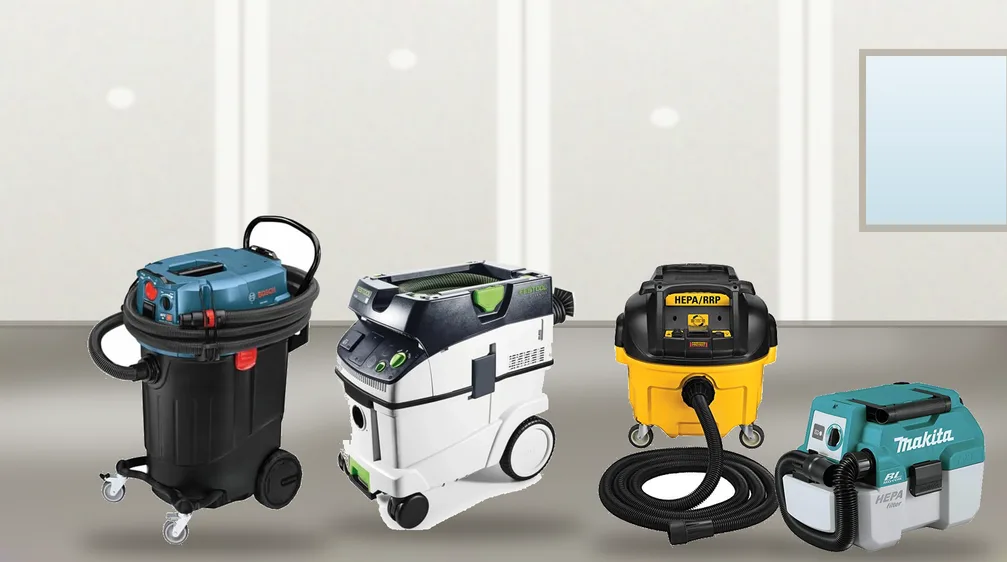
Drywall dust is finer than flour, and it kills ordinary vacuums. It slips through standard filters, blows back into the room and packs the filter so tight that suction drops within minutes. The best vacuum for drywall dust is a wet/dry dust extractor with a HEPA filter and a way to keep that filter clear, such as automatic filter cleaning or a fleece filter bag. Our top pick is the Bosch VAC140AH, which pulses its HEPA filter clean every 15 seconds and ships with a fleece bag. If you need to work without a cord, the Makita XCV11Z is the one to get.
Our top 3 vacuums for drywall dust
See how all 5 vacuums compare in our side-by-side comparison chart ↓
The best vacuum for drywall dust, by job
- Best overall: Bosch VAC140AH A 14-gallon HEPA extractor that cleans its filter every 15 seconds. Its 9-gallon sibling had the strongest suction in an independent test of HEPA shop vacs.
- Best premium: Festool CT 36 EI HEPA A self-cleaning fleece bag protects the HEPA filter, and the vac starts with corded tools or by Bluetooth.
- Best lightweight: DEWALT DWV010 About 21 pounds with a 15-foot hose, two HEPA filters and automatic filter cleaning every 30 seconds.
- Best budget HEPA: Dustless Technologies D1618 A certified HEPA wet/dry vac with semi-automatic filter cleaning for homeowners doing one or two rooms.
- Best cordless: Makita XCV11Z An 18V HEPA vac that ran about an hour on low in independent testing. Good for patches and punch-list cleanup.
Every pick ships with a HEPA filter, has a built-in way to keep fine dust from clogging it, and is a wet/dry dust extractor rather than a household vacuum.
The 5 Best Vacuums for Drywall Dust
Bosch VAC140AH

- Automatic filter cleaning every 15 seconds
- HEPA filter rated for 99.97% at 0.3 microns
- Fleece filter bag in the box
- Up to 150 CFM and 97.3 inches of water lift (Bosch)
- Heavy at about 38 pounds
- Short 9.85-foot hose in the box
- Auto-clean tapping is loud
- More vacuum than a single patch job needs
Bosch VAC140AH review
This is the vacuum we'd buy for finishing a basement, a big remodel or any job with several rooms of sanding. Its main strength is that it keeps working. Every 15 seconds it pulses air back through the HEPA filter to knock off the cake of gypsum that chokes other vacuums. Bosch also packs a fleece filter bag, which traps most of the dust before it ever reaches the filter.
Independent testing backs up the design. In a woodworking magazine's test of HEPA shop vacuums, the smaller 9-gallon Bosch VAC090AH, which uses the same auto-clean approach, had the highest suction of the seven models tested and lost almost nothing by the time its bag was two-thirds full. The VAC140AH adds a bigger 14-gallon tank and is rated by Bosch at up to 150 CFM. It also handles wet pickup and starts on its own when you switch on a connected sander.
It's big and heavy at about 38 pounds, and the included hose is short at under 10 feet, so plan on an extension wand for ceilings. For a single room or a few patches, the lighter DEWALT DWV010 or the cordless Makita XCV11Z is easier to live with.
Festool CT 36 EI HEPA

- HEPA main filter plus a self-cleaning fleece bag
- Starts with corded tools, or with cordless tools by Bluetooth
- Variable suction and a smooth, anti-static 11.5-foot hose
- LevelStop sensors for safe wet pickup
- The most expensive pick here
- No automatic filter pulsing on this model
- Festool bags add ongoing cost
- About 32 pounds
Festool CT 36 EI HEPA review
The CT 36 EI is the extractor to get if drywall sanding is part of your regular work, or if you want the most refined setup. It protects its HEPA filter in a different way from the Bosch. Instead of pulsing the filter, it relies on a tear-resistant fleece bag that collapses each time you switch the vac off, which shakes dust loose so airflow stays strong until the bag is full.
Festool rates it at up to 138 CFM and 96 inches of water lift, with a 9.5-gallon container. The same woodworking magazine test named Festool's larger CT 48 its best overall HEPA vac and noted that the CT 26 and CT 36 share its motor and airflow specs. It starts with corded tools, pairs with Festool cordless tools by Bluetooth, and has sensors that cut power when liquid reaches the top during wet pickup.
The catches are price and running cost. Festool bags cost more than generic ones, and this model has no automatic filter cleaning, so the bag does that job. If you're cleaning up after one project, the Bosch VAC140AH or Dustless D1618 gets you there for less.
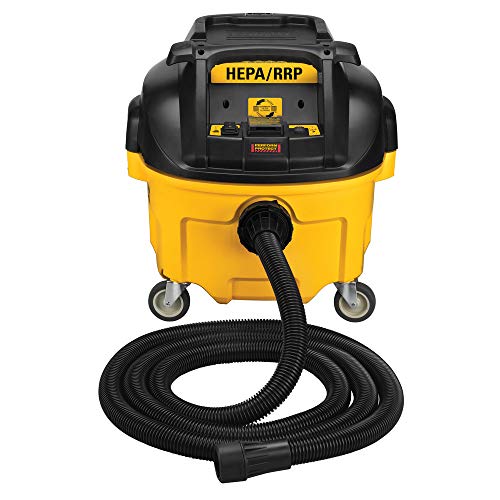
DEWALT DWV010

- Light for a corded extractor at about 21 pounds
- Automatic filter cleaning every 30 seconds
- Two HEPA filters and a fleece bag in the box
- Long 15-foot anti-static hose
- Lowest suction of the extractors in an independent test
- Small 8-gallon tank
- Short 8-foot power cord
- Fewer extras than the Bosch or Festool
DEWALT DWV010 review
The DWV010 is our pick for anyone who has to haul the vacuum around: up a staircase, from room to room or in and out of a truck. At about 21 pounds, it's far lighter than the Bosch or Festool, and it still gives you the features that matter for drywall dust. It comes with two DEWALT HEPA filters that an automatic pulse knocks clean every 30 seconds, and a fleece bag catches most of the dust first.
DEWALT rates it at 150 CFM, and it meets the EPA's lead-safe renovation (RRP) standard for HEPA vacuums with its included HEPA filters, which is a good sign of how well it holds fine dust. The 15-foot anti-static hose reaches high on walls and ceilings and reduces the static shocks that fine dust can cause.
It's not the strongest here. In the same independent HEPA vac test, it had the lowest suction pressure of the group, though it held that level steady as the bag filled. The 8-gallon tank fills sooner, and the 8-foot cord means you'll want an extension cord. If raw power matters more than weight, choose the Bosch VAC140AH.
Dustless Technologies D1618

- Certified HEPA system, so dust can’t bypass the filter
- Semi-automatic filter cleaning
- Same filter works wet and dry
- Up to 138 CFM and 83 inches of water lift (maker)
- No power tool outlet, so it won’t start with your sander
- About 38 pounds
- Filter cleaning isn’t hands-free
- Limited stock at times on Amazon
Dustless Technologies D1618 review
This is the most affordable way we found to get a certified HEPA vacuum built for jobsite dust. Dustless Technologies makes vacuums for drywall sanding and concrete work, and the D1618 brings that design to an 8-gallon wet/dry vac. The maker says the whole system is certified HEPA, which means air can't sneak around the filter, a weak spot on cheap shop vacs that only add a HEPA-style cartridge.
Instead of pulsing on its own, the filter cleaner is semi-automatic: you work it by hand when suction drops, and the maker says it meets the OSHA silica rule. The hydrophobic filter handles both dry dust and wet pickup without a swap, so you can vacuum the sanding dust and then pick up the rinse water from wiping the floor. The exhaust port also turns it into a blower.
It isn't a tool-triggered extractor, so it won't switch on with your sander, and it's heavy at about 38 pounds. For daily sanding with a connected tool, the Bosch VAC140AH or DEWALT DWV010 is the better fit. For cleanup after a homeowner project, this one does the job for less.
Makita XCV11Z

- HEPA filter in a sealed canister
- About 1 hour on low and 31 minutes on high with a 5.0Ah battery in testing
- Light and easy to carry up a ladder
- Wet pickup with an automatic float shutoff
- Modest suction compared with corded extractors
- Small 2-gallon tank
- Battery and charger sold separately
- Shoulder strap sold separately
Makita XCV11Z review
The XCV11Z is the pick for patching holes, cleaning up after a small repair or working where there's no outlet. It runs on a single Makita 18V LXT battery and weighs about 10 pounds with a 5.0Ah pack, so you can carry it in one hand. A HEPA filter sits inside a sealed canister, and an unusual damper pre-filter catches heavier particles and drops them when you switch off, which keeps the HEPA filter from loading up as fast.
In hands-on testing by a well-known tool review site, it ran 31 minutes on high and just over an hour on low with a 5.0Ah battery, which is long for a single 18V pack. The same reviewers called its suction modest but fine for fine dust and gave it 9.3 out of 10. Makita rates it at 57 CFM.
Don't expect it to keep up with a big sanding job. The 2-gallon tank fills quickly with drywall dust, and the suction is well below the corded picks. The XCV11Z is sold as a bare tool, so budget for a battery and charger if you don't already own Makita tools. For whole rooms, step up to the Bosch VAC140AH.
Vacuums for drywall dust compared
|
Best overall
Bosch VAC140AH
|
Best premium
Festool CT 36 EI
|
Best lightweight
DEWALT DWV010
|
Best budget HEPA
Dustless D1618
|
Best cordless
Makita XCV11Z
|
|
|---|---|---|---|---|---|
|
|
|
|
|
|
|
| Power | Corded | Corded | Corded | Corded | 18V battery |
| Tank size | 14 gal | 9.5 gal | 8 gal | 8 gal | 2 gal |
| Filter protection | Auto clean + fleece bag | Self-cleaning fleece bag | Auto clean + fleece bag | Semi-auto clean | Damper pre-filter |
| HEPA filter included | 1 | 1 | 1 | 1 | 1 |
| Wet pickup | 1 | 1 | 1 | 1 | 1 |
| Starts with power tool | 1 | 1 | 1 | – | – |
| Airflow (maker) | 150 CFM | 138 CFM | 150 CFM | 138 CFM | 57 CFM |
| Weight | About 38 lb | About 32 lb | About 21 lb | About 38 lb | About 10 lb |
| Drywall dust fit | 5 | 5 | 4 | 4 | 4 |
| Current price | $713.00 | $999.00 | $499.00 | $312.99 | $249.00 |
| Read review | Read review | Read review | Read review | Read review |
Vacuums for drywall dust compared




Prices and availability change often. Specs come from maker listings, and test results come from the published sources named in How We Picked and Tested. Star ratings are our editorial judgment, not our own lab tests.
Why drywall dust ruins regular vacuums
Drywall dust is ground gypsum mixed with the fillers in joint compound, and most of it is extremely fine. A household vacuum's filter is built for crumbs, hair and sand, not powder. Two things happen when you run one over sanding dust. First, the finest particles pass straight through the filter and get blown back into the room, often out of the exhaust in a visible haze. Second, the dust that does get caught forms a dense cake on the filter that stops airflow. Suction drops, the motor runs hot and, in bagless vacuums, the powder works its way into seals and bearings.
A HEPA filter solves the first problem because it traps at least 99.97% of particles at 0.3 microns. But HEPA alone makes the second problem worse, since a finer filter clogs faster. That's why every pick here pairs a HEPA filter with something that keeps it clear: automatic filter pulsing, a semi-automatic cleaner, a self-cleaning fleece bag or a pre-filter.
A wet/dry body matters too. Shop vacs and dust extractors put the motor above a sealed tank, away from the dust stream, and their larger filters take far more powder before they choke. If you already own a regular shop vac, read our guide to the best wet dry vacuums for models that can take an aftermarket HEPA filter and fine dust bags. Just know that a bolt-on filter is not the same as a sealed HEPA system.
How to choose a vacuum for drywall dust
Drywall dust is fine enough to pass through standard filters and hang in the air. HEPA filters trap 99.97% of particles at 0.3 microns.
Fine gypsum cakes on filters within minutes. Without help, suction falls off long before the tank is full.
Capturing dust at the sander stops most of it from ever reaching the floor or the air.
Big tanks mean fewer stops on large jobs, but you have to carry the vac up stairs and between rooms.
Fine dust builds static in plastic hoses, and you’ll be reaching up to ceilings and down to baseboards.
The last step of drywall cleanup is usually a damp wipe, which leaves dirty water to pick up.
Do you need a dust extractor or just a shop vac?
A dust extractor like the Bosch, Festool or DEWALT is a shop vac designed to stay connected to a sander. It has a HEPA filter, a system that keeps the filter clear and an outlet that switches it on with the tool. If you're finishing more than one room, or you sand drywall for work, it pays for itself in time and in dust you never have to clean.
A HEPA wet/dry vac like the Dustless D1618 is the middle ground. It has the filtration and the filter cleaner, but you start it yourself. That's fine for cleanup after a weekend project.
A cordless HEPA vac like the Makita XCV11Z is for small jobs, ladders and spaces with no power. It's also a smart second vac for contractors who want a quick cleanup tool in the truck.
For jobsite work beyond drywall, such as concrete grinding and silica dust from masonry, our guide to the best vacuum for construction dust covers larger extractors built for those jobs.
How to clean up drywall dust without wrecking your vacuum
-
Contain the room first
Hang plastic sheeting over doorways, cover vents and turn off the HVAC fan so dust doesn’t spread through the house.
-
Connect the vac to your sander
Sanding with the hose attached catches most dust at the source, so there’s far less to clean afterward.
-
Install a filter bag
Use a fleece filter bag for dry dust. It catches most of the powder before it reaches the HEPA filter and makes emptying almost dust-free.
-
Scoop heavy piles
Pick up chunks of compound and thick piles with a dustpan first. Vacuuming piles fills the tank and loads the filter fast.
-
Vacuum top to bottom
Work from ceilings and walls down to baseboards, then the floor, using a brush attachment on walls and window sills.
-
Finish with a damp wipe
Wipe surfaces with a barely damp microfiber cloth or mop to lift the last film of dust, then pick up any water with the vac after removing the bag.
Drywall dust that settles into carpet is hard to get out with a vacuum alone. After the room is clean and dry, a deep clean with one of the best carpet cleaners for home use lifts the fine residue from the pile. Vacuum thoroughly first, since water turns loose dust into a paste.
Drywall dust vacuum FAQs
What is the best vacuum for drywall dust?
The Bosch VAC140AH for most jobs. It has a HEPA filter, cleans the filter automatically every 15 seconds and comes with a fleece bag. For small jobs without a cord, the Makita XCV11Z is the best cordless option.
Will drywall dust ruin my regular vacuum?
It can. The fine dust passes through standard filters, blows back into the room and clogs the filter, which strains the motor. Bagless household vacuums are most at risk. Use a HEPA wet/dry vac or dust extractor instead.
Can I use a regular shop vac for drywall dust?
Only with upgrades. Add a fine dust collection bag and a HEPA-rated cartridge, and expect to tap the filter clean often. Even then, most standard shop vacs aren’t sealed, so some dust escapes. A HEPA dust extractor does the job much better.
Do I need a HEPA filter for drywall dust?
Yes. HEPA filters trap at least 99.97% of particles at 0.3 microns, which keeps fine drywall dust out of the air you breathe. Look for a true HEPA filter, not one labeled HEPA-style.
Is drywall dust harmful to breathe?
It irritates the eyes, nose, throat and lungs, and some joint compounds contain other minerals that are worse to breathe. Wear a well-fitting N95 respirator while sanding and cleaning, and check your compound’s safety data sheet.
Should I use a bag in my shop vac for drywall dust?
Yes, for dry pickup. A fleece filter bag traps most of the dust before it reaches the filter, keeps suction strong and lets you seal and toss the dust instead of dumping a dusty tank. Remove the bag before wet pickup.
How do I get drywall dust out of carpet?
Vacuum slowly with a HEPA vac in several directions, let the carpet sit, then vacuum again. Once loose dust is gone, a carpet cleaner can lift the remaining film. Don’t wet the carpet before vacuuming, or the dust turns to paste.
Can I vacuum drywall dust from hard floors and garages?
Yes. Scoop piles first, then vacuum with a floor tool. For garages and basements with bare concrete, see our best vacuum for concrete floors.
Which vacuum should you buy for drywall dust?
- Best overall: Bosch VAC140AH
- Best premium: Festool CT 36 EI HEPA
- Best lightweight: DEWALT DWV010
- Best budget HEPA: Dustless Technologies D1618
- Best cordless: Makita XCV11Z
For drywall dust, the filter system matters more than raw power. Choose the Bosch VAC140AH for big jobs, the Festool CT 36 EI if you sand often and want the most refined setup, or the DEWALT DWV010 if you carry the vac a lot. The Dustless D1618 is the affordable HEPA choice for home projects, and the Makita XCV11Z handles small repairs without a cord. Once the dust is gone, a sealed HEPA household vacuum like the ones in our best vacuums for dust mite allergies guide keeps the rest of the house clean.
How We Picked and Tested
We started with what people searching this really need: a vacuum that can pick up powder-fine drywall dust without blowing it back into the room or clogging within minutes. So before looking at any model, we set three must-haves, and all five picks meet all three. First, a HEPA filter in the box, not sold as an add-on. Second, a built-in way to stop fine dust from choking that filter: automatic filter cleaning (Bosch VAC140AH and DEWALT DWV010, which also ship with a fleece bag), a self-cleaning fleece filter bag (Festool CT 36 EI), a semi-automatic filter cleaner (Dustless Technologies D1618) or a damper pre-filter (Makita XCV11Z). Third, a wet/dry dust extractor or shop vac body rather than a household vacuum, since drywall dust is what wears out household motors.
Those rules ruled out some popular choices. Regular shop vacs that only take a HEPA filter as an extra were dropped, and so were budget vacs sold with “F9” or HEPA-style filters, which don’t meet the HEPA standard. Within the rules, we chose one vacuum for each job people ask about most: whole-room remodels, daily sanding, carrying the vac around, a lower budget and cordless cleanup. Each award reflects where that model is strongest, not a general score. Features we treat as optional, such as a power tool outlet, wet pickup and tank size, are shown per pick in the comparison table instead of being used as rules.
To judge real performance, we relied on independent testing and expert advice rather than marketing claims. Our main source was Fine Woodworking‘s test of seven HEPA shop vacuums, which measured suction with fine dust as the filter bags filled and is our source for the Bosch, Festool and DEWALT results. We used Pro Tool Reviews‘ hands-on runtime and suction tests of the Makita XCV11, and Homes & Gardens‘ interviews with cleaning and restoration pros for why HEPA wet/dry vacs are the right tool for drywall dust. We also checked Pro Trade Craft’s shop vac showdown, which found that standard shop vacs clog quickly on plaster dust, plus the EPA’s RRP standard for HEPA vacuums and OSHA’s silica rule, which several of these machines are built to meet.
We checked every feature and spec we mention, including filters, filter cleaning, tank sizes, airflow, hose and cord lengths and weights, against the makers’ own listings from Bosch, Festool, DEWALT, Dustless Technologies and Makita and against the current Amazon listings in October 2026. Airflow figures are maker ratings, not our measurements, and test numbers come from the outside reviewers named above. We did not test these vacuums ourselves; we point out each one’s limits so you can match it to the size of your job.
Why trust CleanTheFloor?
CleanTheFloor publishes practical floor-care advice and buying guides for homeowners and pet owners. We base our picks on published test results and verified specifications rather than marketing claims, and we point out each product's drawbacks.