A loud vacuum can wake a sleeping partner, a baby or a night-shift worker from two rooms away, and a light sleeper may not fall back asleep for an hour. The best vacuum cleaner for light sleepers should run at a low, steady hum instead of a high whine, offer lower power settings for quiet moments, and still clean well enough that you don't have to go over the same spot again and again. Being able to run it while the house is empty, or on a schedule, helps too.
We compared 5 quiet vacuums with published noise levels, from canisters and cordless sticks to robots, to help you find the right one for your home.
Our top 3 quiet vacuums for light sleepers

See how all 5 quiet vacuums compare in our side-by-side comparison chart ↓
The best quiet vacuum for light sleepers, by need
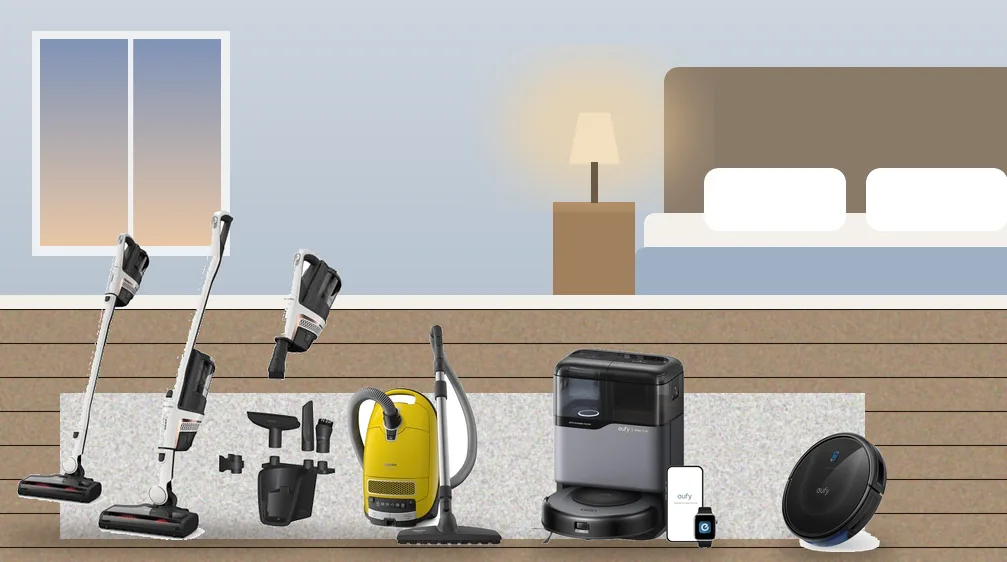
- Best overall: Miele Complete C3 Calima Measured at about 60 dB on its lowest setting and 66 dB on a middle one in an independent test, with a sealed bag and HEPA filter.
- Best cordless: Miele Triflex HX2 An independent lab measured the Triflex HX2 at about 66 to 67 dBA, which puts it among the quietest sticks tested.
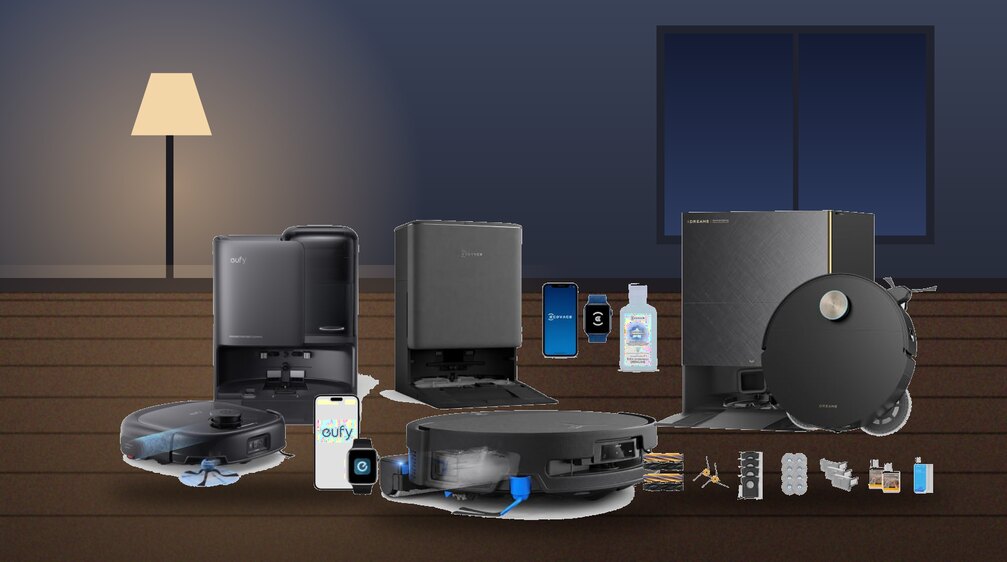
- Best robot: eufy Omni C20 eufy rates it at about 51 dB on its lowest suction, and it maps your rooms so you can schedule it for when nobody is sleeping.
- Best budget cordless: Shark Cordless Pet IX141 Measured at about 67 dBA in independent testing, close to sticks that cost far more.
- Best budget robot: eufy 11S MAX Rated at 55 dB by eufy and only 2.85 inches tall, so it slips under beds and sofas without much fuss.
Every pick has a published noise level of about 67 dB or lower in a normal or low setting, and a lower power setting to make it quieter still.
The 5 Best Quiet Vacuums for Light Sleepers
Miele Complete C3 Calima

- About 60 dB on setting 1 and 66 dB on setting 3 in independent testing
- Six suction settings changed with a foot switch
- Sealed bag system with a HEPA Lifetime filter
- 36-foot cleaning radius means fewer plug changes
- Turbobrush is made for low to medium pile, not thick carpet
- Max setting is louder, at about 72 dB
- You have to buy replacement bags
- A canister is bulkier to carry up stairs than a stick
Miele Complete C3 Calima review
This is our top pick because it gives a light sleeper's household the most control over noise. In an independent sound-meter test of the Complete C3 at 1 meter, it measured about 60 dB on setting 1 and 66 dB on setting 3. That's in the range of normal conversation. Even on its highest setting, it measured about 72 dB, which is still quieter than many uprights at full power.
The noise is low and steady, not high-pitched, and that matters as much as the number. A bagged canister keeps the motor inside an insulated body on the floor, away from your ears, and the sealed bag means no rattling dust cup. You change suction with your foot, so dropping to a quieter setting near a bedroom door takes a second. The HEPA Lifetime filter also helps if the light sleeper in your home has allergies.
The Turbobrush is air-driven and made for hard floors and low to medium pile carpet. If your home has thick carpet, you'll want a model with a motorized head, and it will be louder. For more bag-style options, see our guide to the best bagged vacuum cleaners.
Miele Triflex HX2

- About 66 to 67 dBA in independent lab testing
- Automatic floor detection adjusts the brush
- Up to 60 minutes on the lowest setting
- Replaceable battery and HEPA Lifetime filter
- The 60-minute runtime is without the main floor head
- Heavier than most sticks because of its 3-in-1 design
- Small bin compared with a canister
- Costs more than most cordless vacuums
Miele Triflex HX2 review
A cordless stick is the easiest vacuum to grab for a quick pass after dinner or during a baby's nap, but most of them are loud and whiny. The Triflex HX2 is the exception. In independent lab testing, the HX2 Cat & Dog version, which uses the same motor and floor head, measured about 66 dBA on hard floors and 67 dBA on carpet. That put it at the top of the quiet list among the cordless sticks that lab tested.
It's also a capable cleaner. The electrobrush detects the floor type and adjusts on its own, so you don't have to switch to a louder mode by hand. Miele's 3-in-1 design lets you move the motor unit low for cleaning under beds, high for upright use, or turn it into a handheld. The battery swaps out, and the HEPA Lifetime filter doesn't need replacing.
Know the limits. Miele's up-to-60-minute runtime applies to the lowest setting without the main floor head, so expect less in real use. It's heavier than a basic stick, and the bin is small. If you clean a whole house in one go, the Miele C3 canister is the quieter choice.
eufy Omni C20

- eufy rates it at about 51 dB on its lowest suction setting
- Laser navigation with up to 3 saved floor maps
- Self-empties into a 3.1-liter bag, up to 60 days
- Slim 3.35-inch body fits under most beds and sofas
- The dock is loud when it empties, so plan when it runs
- Higher suction levels are louder than 51 dB
- Avoid carpet pile over about 0.78 inch
- Works only with 2.4 GHz Wi-Fi
eufy Omni C20 review
A robot is the best fit for a light sleeper in one way: you can have it clean when nobody is resting. Set it to run while you're at work or out for groceries, and noise stops mattering. When it does need to run at home, eufy rates the Omni C20 at about 51 dB on its lowest suction setting, which is in the range of a quiet conversation.
It's a smart robot for the money. iPath laser navigation builds a map and stores up to three floors, so you can send it to the kitchen and keep it away from a nursery. It vacuums and mops in one run, lifts its mop on carpet and runs up to 132 minutes in Standard mode. At 3.35 inches tall, it gets under beds where dust collects.
The weak spot for light sleepers is the dock. Self-emptying is loud for a few seconds, so set schedules for times when nobody is asleep. Thick carpet over about 0.78 inch is also off limits. For more mapping robots, see our picks for the best robot vacuums with LiDAR.
Shark Cordless Pet IX141

- About 67 dBA in independent lab testing
- Up to 40 minutes in standard mode (Shark’s figure)
- Converts to a handheld with crevice and pet tools
- LED headlights and an XL dust cup
- No HEPA filter
- Bristle brush can wrap with long hair
- Runtime figure is measured at the handheld, not with the floor head
- Not as strong on thick carpet as premium sticks
Shark Cordless Pet IX141 review
If you want a quieter stick without spending premium money, the IX141 is the one to look at. In independent lab testing, it measured about 67 dBA on hard floors and carpet. That's nearly as quiet as the Miele Triflex HX2 and quieter than several well-known sticks that cost more.
For everyday use, it covers the basics well. The bristle brushroll picks up crumbs and pet hair on hard floors and rugs, LED headlights show dust under furniture, and the wand comes off to make a handheld for stairs, couches and the car. You get a crevice tool and a pet tool. Shark rates it at up to 40 minutes, measured with the handheld in standard mode.
It has no HEPA filter, so it's not the best choice for allergies, and long hair can wrap the brush. Expect less runtime with the floor head on. If pet hair is your main concern, see our picks for the best cordless vacuums for pet hair and carpet.
eufy 11S MAX

- eufy rates it at 55 dB
- Only 2.85 inches tall
- Up to 100 minutes on hard floors
- BoostIQ raises suction on carpet only
- No mapping, it uses bounce navigation
- No Wi-Fi or app, you control it with the remote
- Small 0.6-liter bin, no self-emptying
- Best for hard floors up to medium pile carpet
eufy 11S MAX review
The 11S MAX is a basic robot, but it's a quiet one, and it costs much less than mapping robots. eufy rates it at 55 dB, about the level of a quiet conversation. It's also slim at 2.85 inches, so it gets under beds, dressers and low sofas.
It suits small homes and apartments with mostly hard floors. You press start on the robot or the remote, or set it to run daily at the same time, and it cleans until the battery runs low, up to 100 minutes on hard floors. BoostIQ raises suction when it senses carpet and drops it again on hard floors, so it isn't loud the whole time.
The trade-off is that it doesn't map. It bounces around the room, so it can miss spots and take longer. There's no Wi-Fi or app, and the small bin needs emptying by hand. If you want room-by-room control, step up to the eufy Omni C20.
Quiet vacuums for light sleepers compared
|
Best overall
Miele C3 Calima
|
Best cordless
Miele Triflex HX2
|
Best robot
eufy Omni C20
|
Best budget cordless
Shark IX141
|
Best budget robot
eufy 11S MAX
|
|
|---|---|---|---|---|---|
|
|
|
|
|
|
|
| Type | Bagged canister | Cordless stick | Robot with dock | Cordless stick | Robot |
| Published noise | About 60-66 dB | About 66-67 dBA | About 51 dB (low) | About 67 dBA | 55 dB |
| Source | Independent test | Independent lab | Maker | Independent lab | Maker |
| Quieter setting | 1 | 1 | 1 | 1 | 1 |
| HEPA filter | 1 | 1 | – | – | – |
| Runs on a schedule | – | – | 1 | – | 1 |
| Room mapping | – | – | 1 | – | – |
| Quiet for light sleepers | 5 | 4 | 5 | 4 | 4 |
| Current price | $754.38 | $624.00 | $379.99 | $199.99 | $169.99 |
| Read review | Read review | Read review | Read review | Read review |
Quiet vacuums for light sleepers compared


Noise figures come from the maker or the independent testers named in How We Picked and Tested. Test distances and settings vary, so compare figures as a guide, not exact numbers. Star ratings are our editorial judgment.
How loud is too loud for a light sleeper?
Most full-size vacuums run somewhere around 70 to 80 dB, and many cordless sticks hit the high 70s or 80s on boost. That's about as loud as a busy street. The quietest models in this guide run in the 50s and 60s, closer to a normal conversation.
The decibel scale isn't linear. A 10 dB increase sounds roughly twice as loud to most people, so a vacuum at 66 dB sounds about half as loud as one at 76 dB. Even a few decibels make a real difference at a bedroom door.
The number isn't everything. Light sleepers react to sudden and high-pitched sounds more than to a low, steady hum. The Sleep Foundation notes that light sleepers wake from smaller disturbances than heavy sleepers. That's why the type of sound matters: a canister on the floor, behind a closed door, is much easier to sleep through than a high-pitched stick motor right at ear level. A robot that clacks into furniture or a dock that roars while emptying can be more disturbing than a steady vacuum running a few decibels louder.
Walls, doors and floors also change what reaches the bedroom. If you live in a small space where every sound carries, our guide to the best vacuums for studio apartments covers compact models that suit tight quarters.
How to choose a quiet vacuum
A box that says “quiet” means little. A decibel figure from the maker or an independent test gives you something to compare.
Lower suction means less noise. A quiet setting lets you clean near a bedroom without waking anyone.
A deep hum is easier to sleep through than a whine at the same volume.
The quietest way to vacuum is to do it when nobody is asleep.
A quiet vacuum that needs three passes makes more total noise than a strong one that needs one.
Dust in the air can also disturb sleep for people with allergies.
Which type of quiet vacuum is right for you?
Bagged canisters are the quietest full-size vacuums. The motor sits in an insulated body on the floor, and the bag soaks up some sound. Pick one if you clean a whole home and want low noise every time. If anyone at home also has dust or allergy problems, our guide to the best vacuums for dust mite allergies covers sealed models made for that.
Cordless sticks are handy for quick cleanups but are usually the loudest type at full power. Choose one that measured quiet in testing, and use the lowest setting near bedrooms.
Robot vacuums can be quiet on low, but their real advantage is timing. Schedule them for when the house is empty and noise stops being a problem.
Uprights clean thick carpet best, but most of them are loud. If you need an upright, look for one with a brushroll off switch and lower power settings, and run it with bedroom doors closed.
How to vacuum without waking a light sleeper
-
Start far from the bedroom
Clean the rooms farthest from the sleeper first, and do the hallway outside the bedroom last, on the lowest setting.
-
Close doors between you
A closed door blocks a lot of sound. Close the bedroom door and any doors in between before you start.
-
Use the lowest setting that works
Hard floors rarely need full power. Save higher settings for rugs and carpet away from the bedroom.
-
Keep filters and brushes clean
A clogged filter or a hair-wrapped brush makes a vacuum work harder and whine louder. Clean them as the maker suggests.
-
Schedule robots for empty hours
Set the robot and its self-emptying dock to run when you’re out, not at night or early in the morning.
-
Add rugs on hard floors
Area rugs soften the sound of footsteps and the vacuum itself, especially in apartments with neighbors below.
Hard floors carry sound more than carpet does. If your home is a mix of both, our guide to the best vacuums for hardwood and carpet picks models that handle each surface without running at full power everywhere.
Quiet vacuum for light sleepers FAQs
What is the best vacuum cleaner for light sleepers?
For most homes, the Miele Complete C3 Calima. It measured about 60 dB on its lowest setting in an independent test, makes a low hum instead of a whine and has six power levels. For a cordless option, choose the Miele Triflex HX2.
What decibel level is considered quiet for a vacuum?
Under about 70 dB is quiet for a vacuum, and under about 65 dB is very quiet. Many common vacuums run between 70 and 80 dB.
Are cordless vacuums quieter than corded ones?
Not usually. Many cordless sticks have small, fast motors that sound loud and high-pitched. A few, like the Miele Triflex HX2 and Shark IX141, measured quieter in testing. Bagged canisters are the quietest corded type.
Can I run a robot vacuum while someone is sleeping?
A quiet robot on its lowest setting may not wake a sleeper in another room, but it’s better to schedule it for when nobody is asleep. Keep it out of the bedroom with no-go zones, and don’t let the dock self-empty at night.
Why is a bagged vacuum quieter?
In a canister, the motor sits inside an insulated body on the floor, and the bag absorbs some sound. Bagless models often rattle as debris spins in the cup.
Does a quiet vacuum clean as well as a loud one?
A well-designed one can. Noise often comes from airflow leaks, motor design and vibration, not just suction power. Each pick here cleans well on the floors it’s designed for.
What is the quietest vacuum for a small apartment?
For mostly hard floors, a slim robot like the eufy 11S MAX is quiet and simple. If you want something light to carry around, see our guide to the best lightweight vacuums.
How can I make my current vacuum quieter?
Clean or replace the filters, empty the bin early, cut hair off the brush and check the hose for clogs. Use a lower setting where you can, and close doors between you and the sleeper.
Which quiet vacuum should you buy?
- Best overall: Miele Complete C3 Calima
- Best cordless: Miele Triflex HX2
- Best robot: eufy Omni C20
- Best budget cordless: Shark Cordless Pet IX141
- Best budget robot: eufy 11S MAX
For a home with a light sleeper, choose a vacuum with a real noise number and a setting you can turn down. The Miele C3 Calima is the quietest way to clean a whole home. Pick the Miele Triflex HX2 for quiet cordless cleanups, the eufy Omni C20 to clean on a schedule, the Shark IX141 for a quieter stick on a budget, or the eufy 11S MAX for simple, low-cost robot cleaning.
How We Picked and Tested
We started with what a light sleeper actually needs from a vacuum: less noise, and control over when and how loud it runs. Before choosing any model, we set two must-haves, and all five picks meet both. First, a published noise level of about 67 dB or lower in a normal or low setting, from either the maker or an independent tester. Second, a quieter setting: the Miele Complete C3 Calima has six suction levels, the Miele Triflex HX2 and Shark IX141 have lower power modes, and both eufy robots run at reduced suction unless they sense carpet. We left out popular vacuums that missed the noise rule, such as uprights rated in the high 70s and cordless sticks measured above 70 dB, and models sold as quiet with no number behind the claim.
Within those rules, we chose one vacuum for each common need: whole-home cleaning, cordless cleanups, scheduled robot cleaning, a budget stick and a budget robot. Each award reflects where that model is strongest. Features we treat as optional, such as HEPA filtration, room mapping and scheduling, are shown per pick in the comparison table instead of being used as rules.
For noise, we used independent measurements wherever we could find them and labeled maker figures as maker figures. The Triflex HX2 and Shark IX141 figures come from lab testing by RTINGS, as compiled by QuietTechReport, which compared measured noise across cordless vacuums. The Miele Complete C3 figures come from an independent sound-meter test at 1 meter by the review site top-aspirateur, which measured each power setting. The eufy Omni C20 and 11S MAX figures are eufy’s own ratings from its quiet robot vacuum guide and product pages. Because test distances and settings vary, we treat small differences between figures as a guide, not a ranking. For how noise affects light sleepers, we followed the Sleep Foundation, which explains that light sleepers have lower arousal thresholds and wake from smaller disturbances.
We checked every feature and spec we mention, including suction settings, filters, runtimes, heights, bin and bag sizes, and navigation, against the makers’ listings from Miele, eufy and Shark and the current Amazon listings in October 2026. Where a maker figure comes with a condition, such as Miele’s runtime without the floor head or Shark’s runtime measured at the handheld, we say so. We did not test these vacuums ourselves; we point out each one’s limits so you can match it to your home.
Why trust CleanTheFloor?
CleanTheFloor publishes practical floor-care advice and buying guides for homeowners and pet owners. We base our picks on published test results and verified specifications rather than marketing claims, and we point out each product's drawbacks.